
Dried Gouache Palette
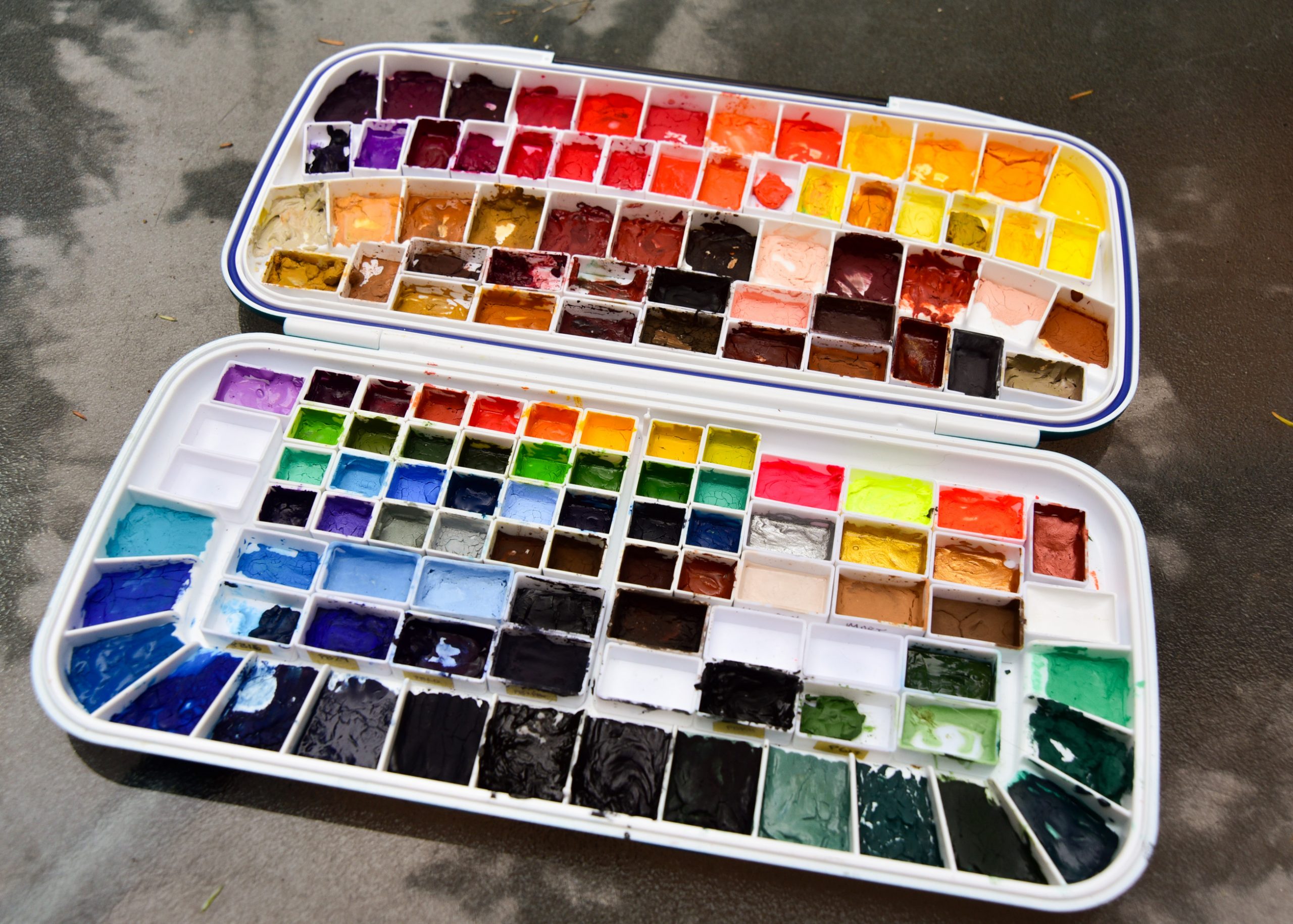
When I first got into gouache years ago, I was thrilled to find a paint that had everything that watercolour had, but with a few things that I found watercolour was lacking: namely, matteness and opacity. People often just call it “opaque watercolour,” and that is exactly what I love about it.
However, I was told that the one thing gouache will never have in common with watercolour is that it isn’t meant to be dried and used in pans. It’s meant to be squeezed out onto a palette fresh and new every time. Because of that, when I wanted to simply do some sketching or practice, I always reached for my watercolours, but I kept trying to make them into gouache even if I didn’t realise that’s what I was doing. I’d mix in titanium white to make them more opaque, or use them thickly, but it doesn’t work in quite the same way. So I started experimenting with ways to have portable and accessible gouache at the ready.
First, I tried a palette that had a silicone seal that made each compartment airtight. I put a bit of gouache, and at the suggestion of another artist’s video, I mixed in a drop of Winsor & Newton Blending medium. It stayed wet for a few months, but because I didn’t like the idea of dipping my brush directly into each paint, I would still get out a palette and a palette knife and dispense a little bit of each colour before beginning my painting. That isn’t very many steps away from just squeezing it fresh from the tube. If anything, it was more complicated. I stopped that tactic when I finally encountered mould. Only one gouache ever moulded on me, and it took months.
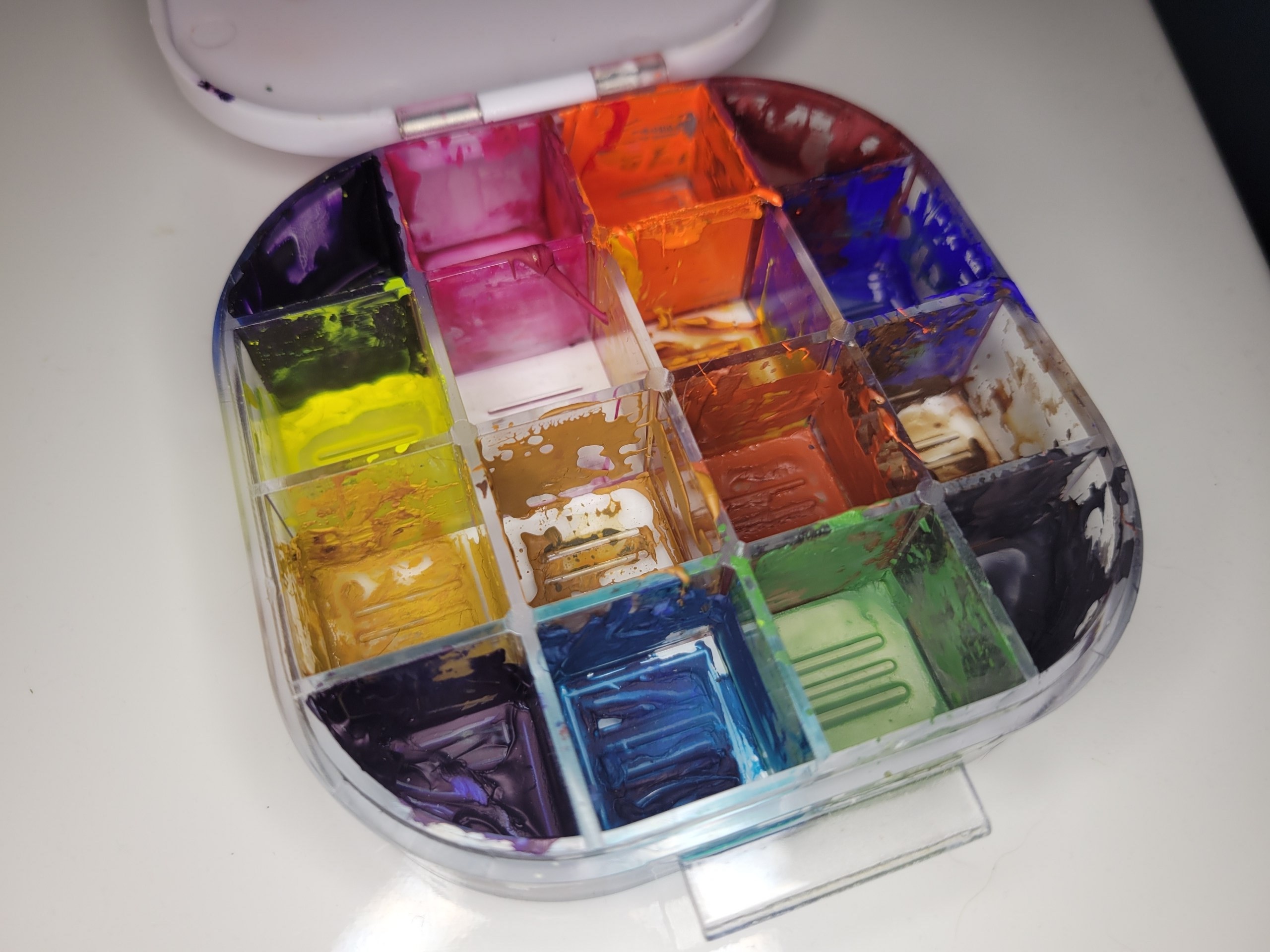
I emptied out the non-moulded gouache that I had left into a wet palette, intent on just using it up, but the next day I saw that the leftover paint that I hadn’t been able to scrape from the compartments was dried into a thin film which reactivated perfectly with water and was useable just the way I wanted it to be. So, I rehoused the gouache once again into a ceramic watercolour palette this time. That worked out just fine. It dried, it cracked a little, but it was perfectly useable. The only issue was that the palette was ridiculously huge.
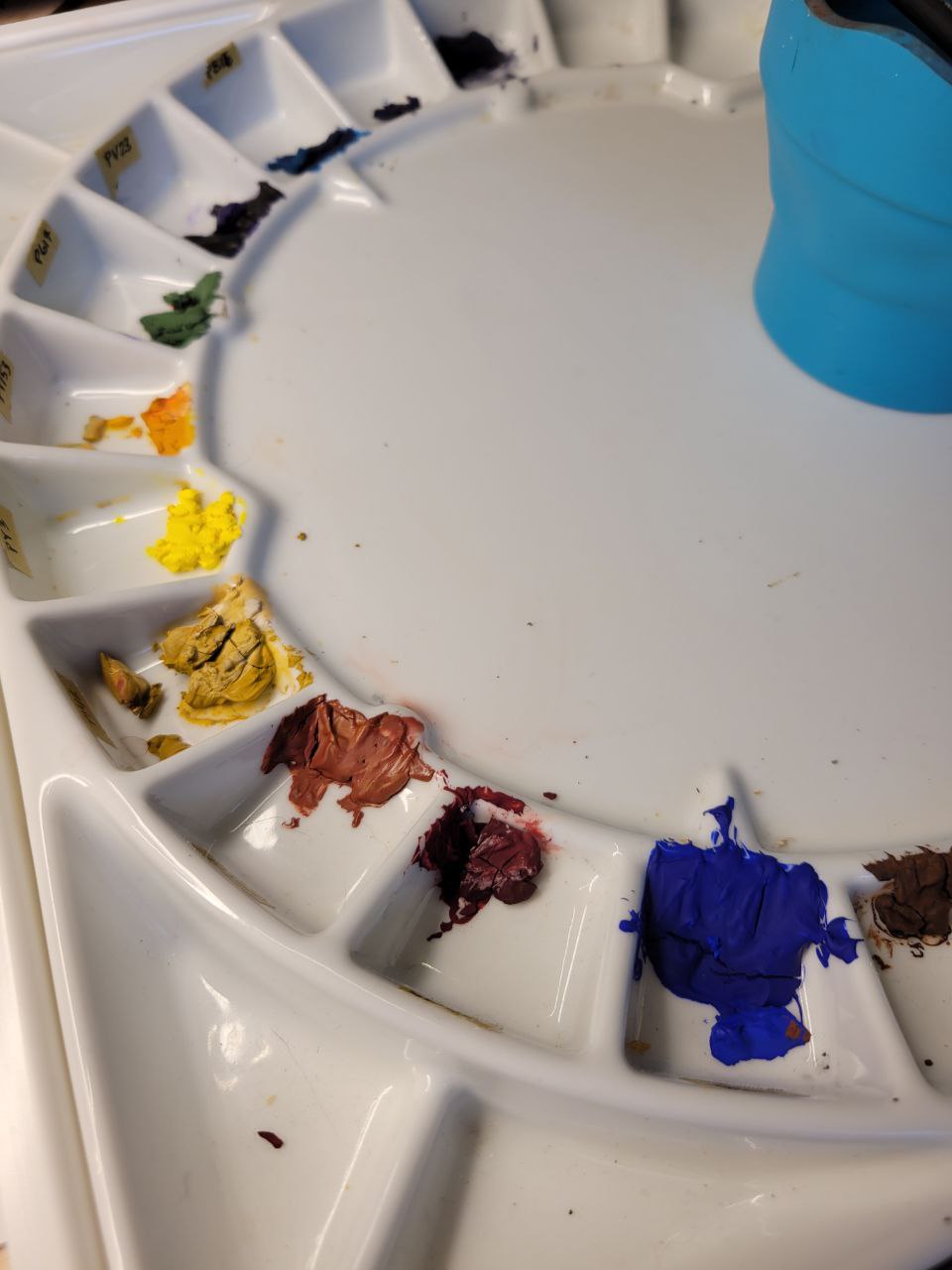
Next–with the same gouache again!–and a lot of distilled water and another drop of blending medium, I put it into a smaller plastic palette I had lying about and let it dry by the window for a week. I was left with dried gouache that works just like watercolour.
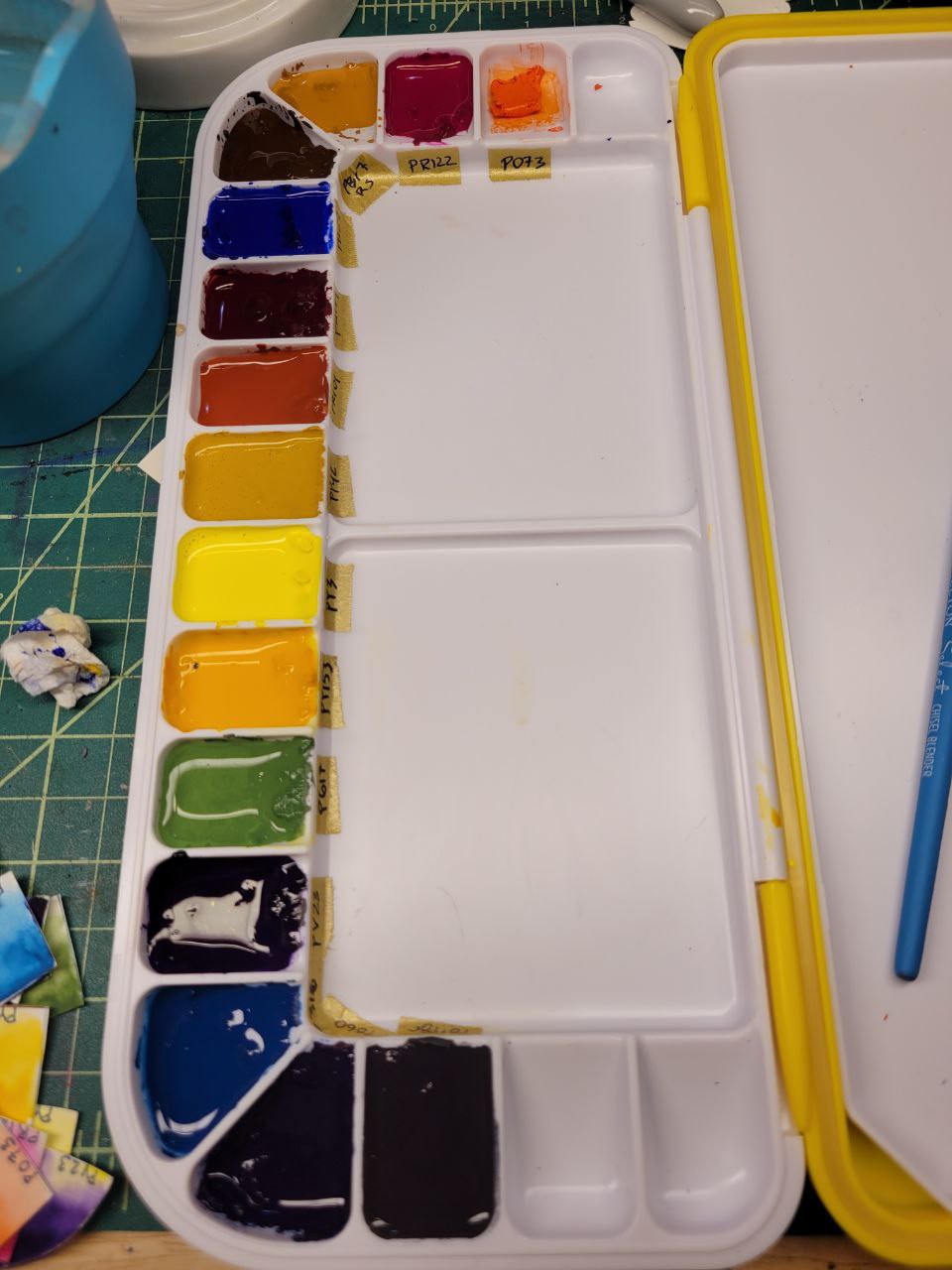
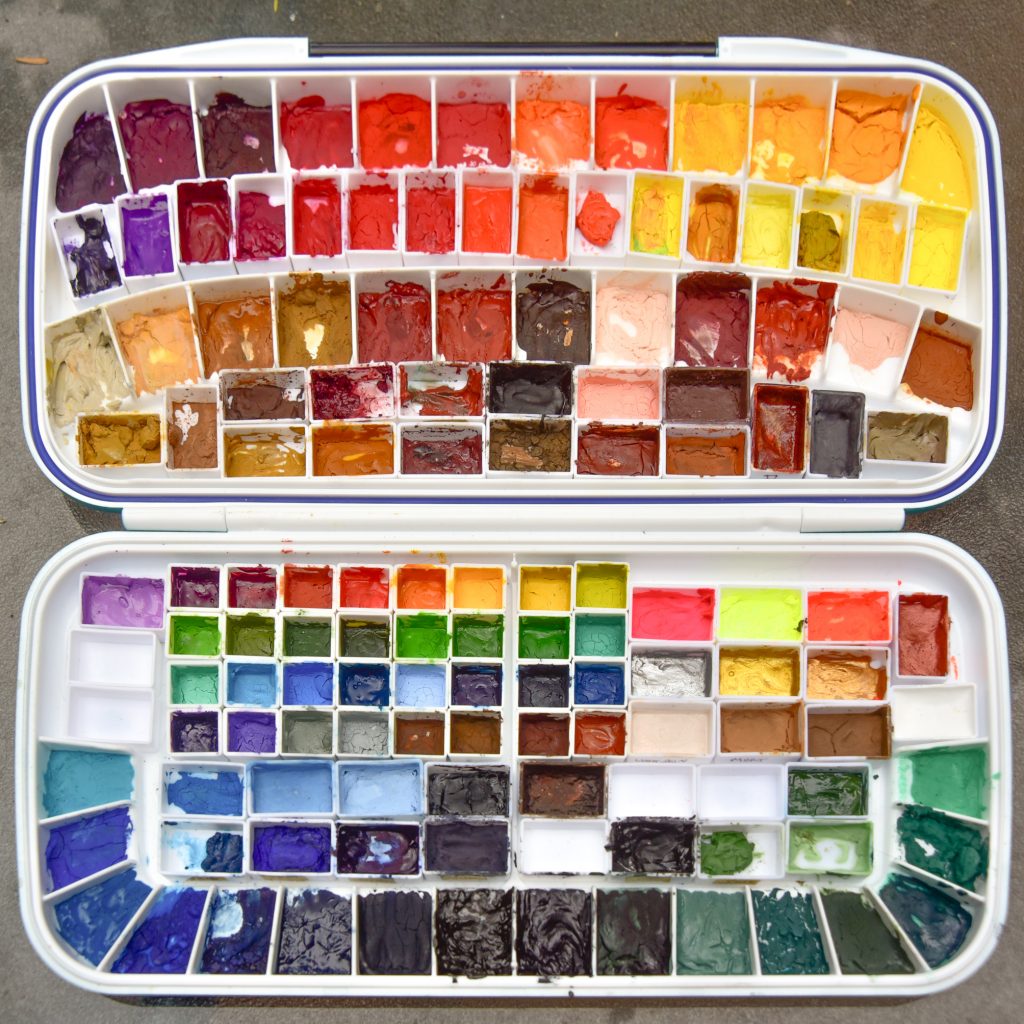
Over the years, I’ve accumulated a lot of gouache, and though I use the smaller palette for portability, I got a big two-part palette, and dried every gouache I owned or made, along with some mixes that I use all the time, my very own convenience blends.
The Set Up
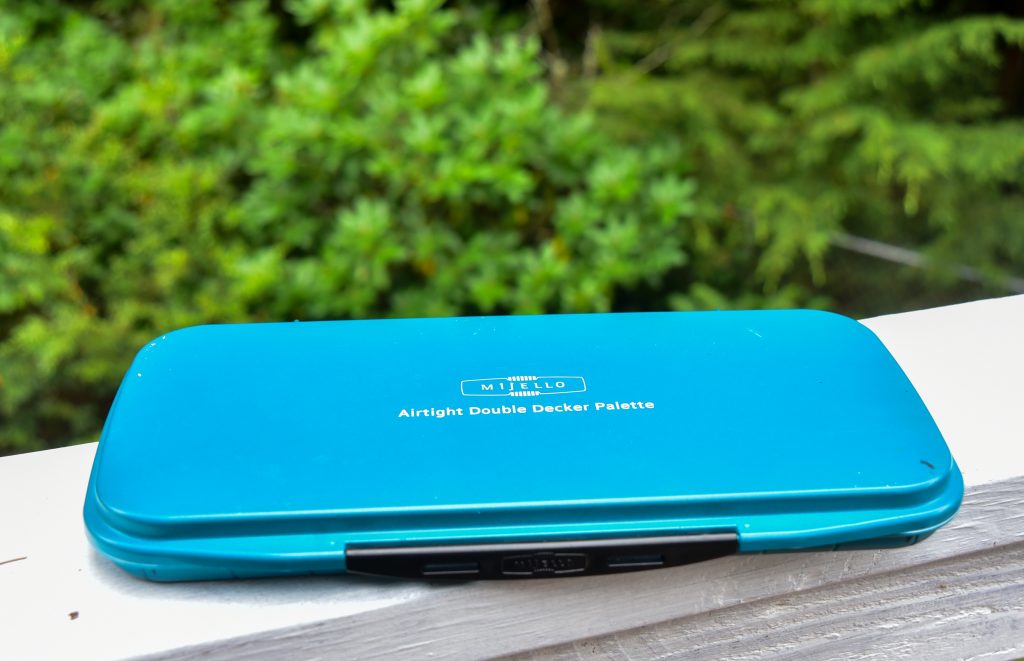
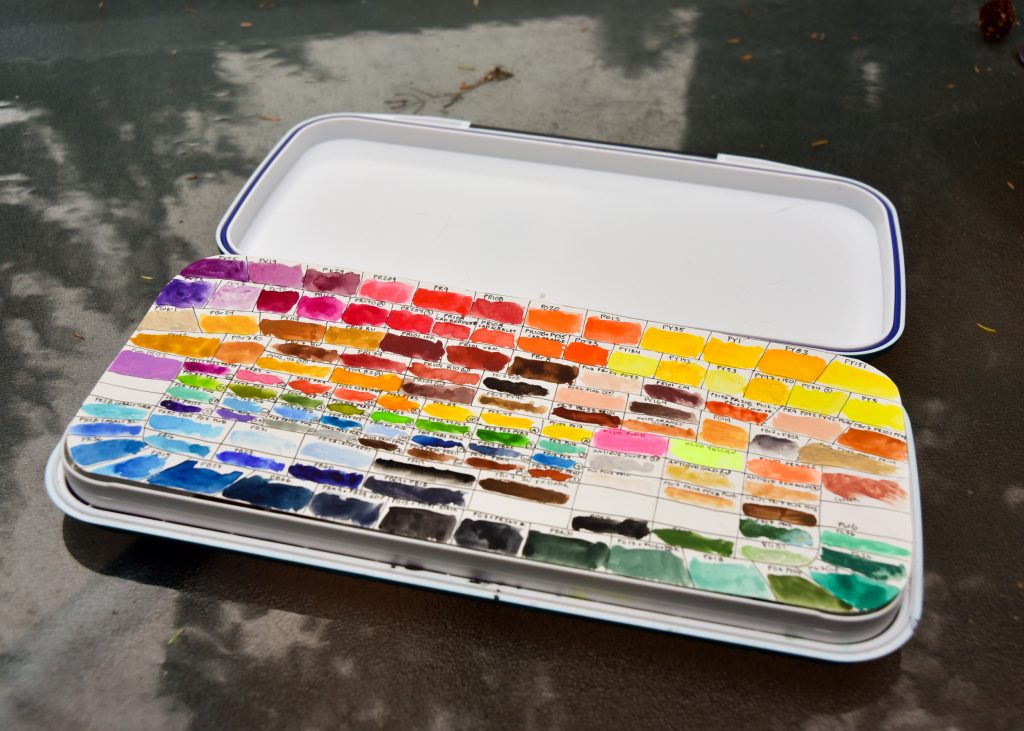
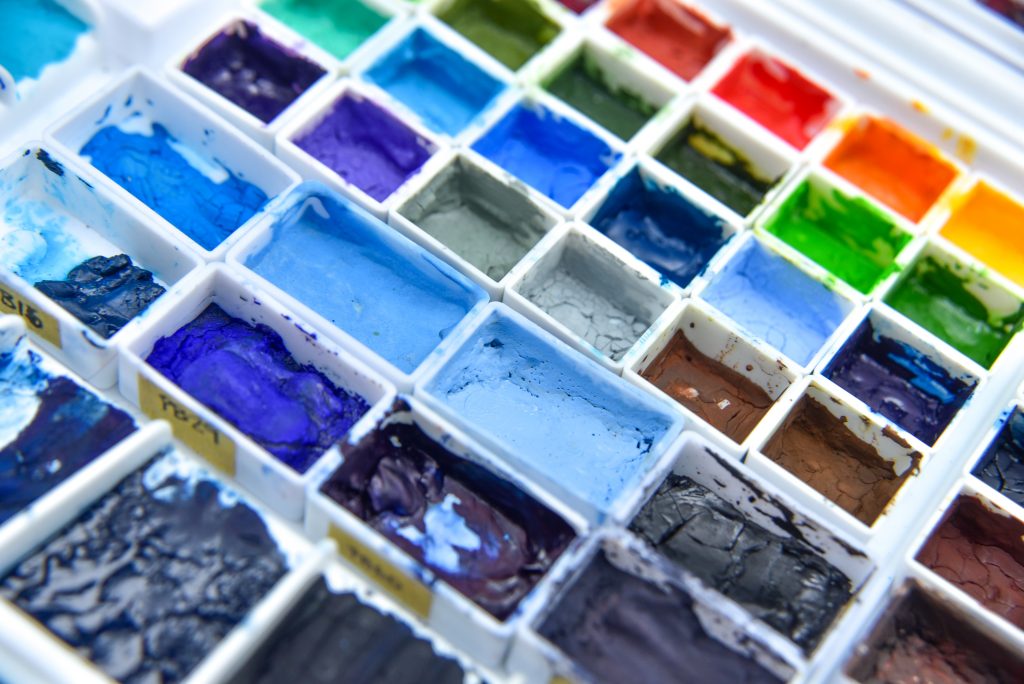
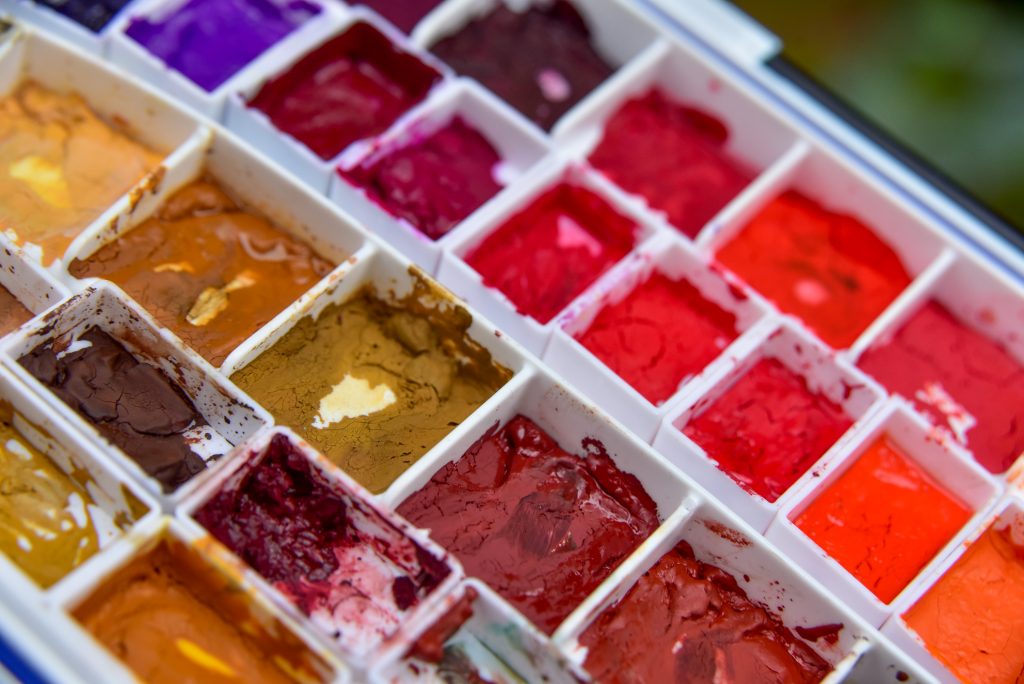
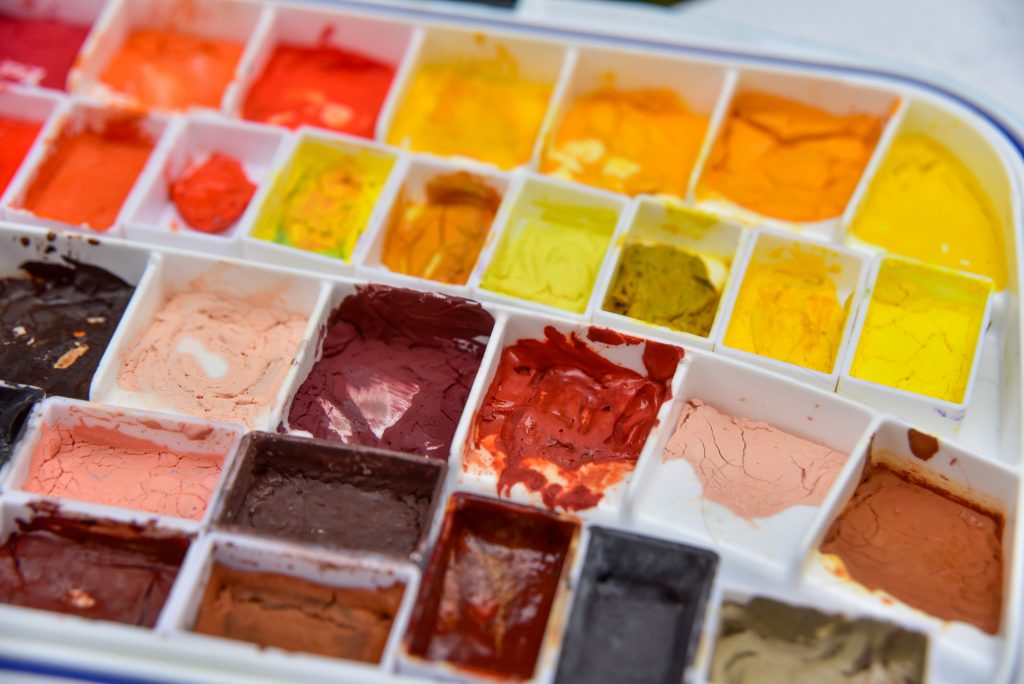
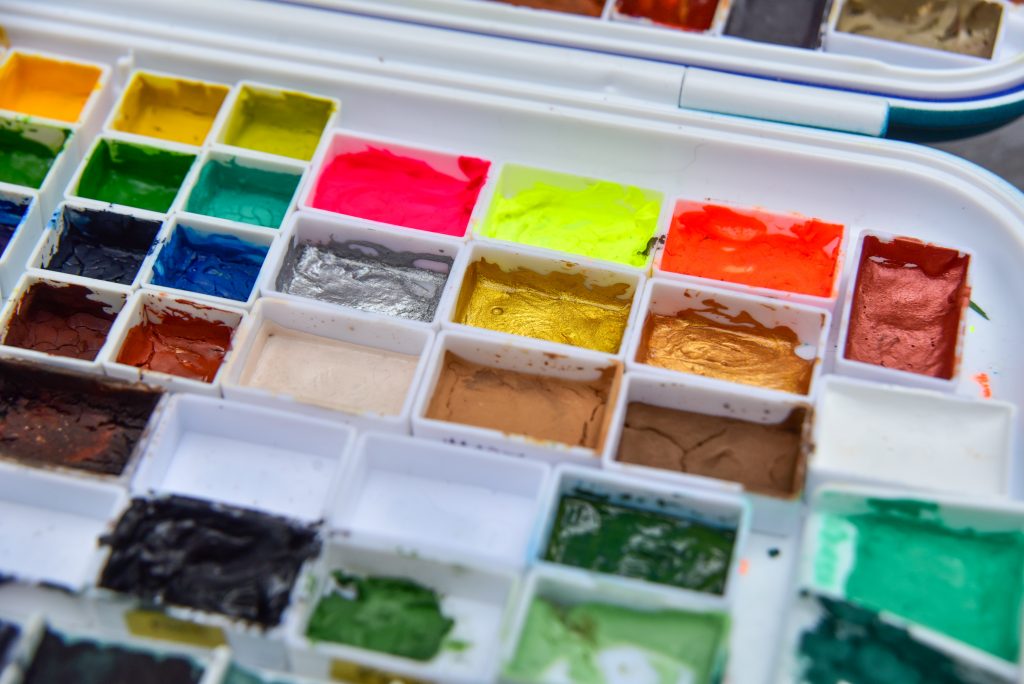
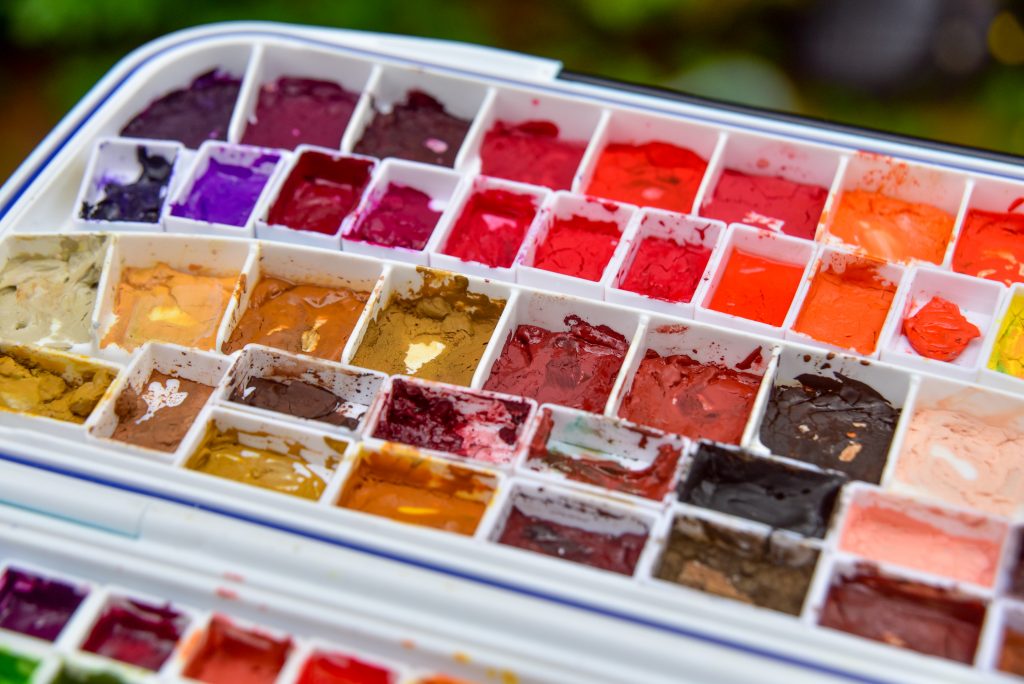
I still use fresh gouache, of course. Like, when I am working with a limited palette (like with the Holbein Irodori Gouache) or when I want to do something fairly large. I also use fresh white most of the time, though I do have dried white in the palette for when I don’t even want to do that. Still, sometimes, like when I’m doing colourful underpaintings, I need fresh white most of all. But, otherwise, 80% of my gouache paintings are done with this dried gouache.
I try to organise the whole thing by hue, and there are very few outliers, so I’m happy about that. But I can now experiment with anything, including little samples I’m given! With this setup, it means that I practice with gouache constantly. It means that I don’t ever feel that odd sensation of “oh but I don’t want to get it all set up for just practice.”
Tips, Tricks, and Cracking
Though spraying the whole palette over with water works alright, I prefer to drop water directly into each well before I start, or at least each well I know I’ll be using. I have heard that people worry that too much water kills the opacity of gouache, but I haven’t yet run into a problem where I couldn’t get enough paint. Even with dried white. My best advice there, I think, is to just be patient. Same with watercolour, really, before starting, it’s always best to wet the paints and wait a bit for them to absorb the water.
I use an external palette for mixing. I like a grey tempered glass most of all. I found one that has a thumb hole for holding and that is my favourite way to go about it. A bit of fresh white on the glass, and then I mix there.
The plastic palette I’ve liked the most for this is the one which currently holds my largest collection of gouache. It’s made by Mijello, and it has two levels to it. I, however, have added my own full and half pans to fill in all of the “mixing area”. They’re stuck in with blue tack, so I can rearrange them if I ever wanted to, but then I’d have to redo my map and I’d rather not.
I would suggest leaving space for a brush or two if portability is a big attraction to the system.
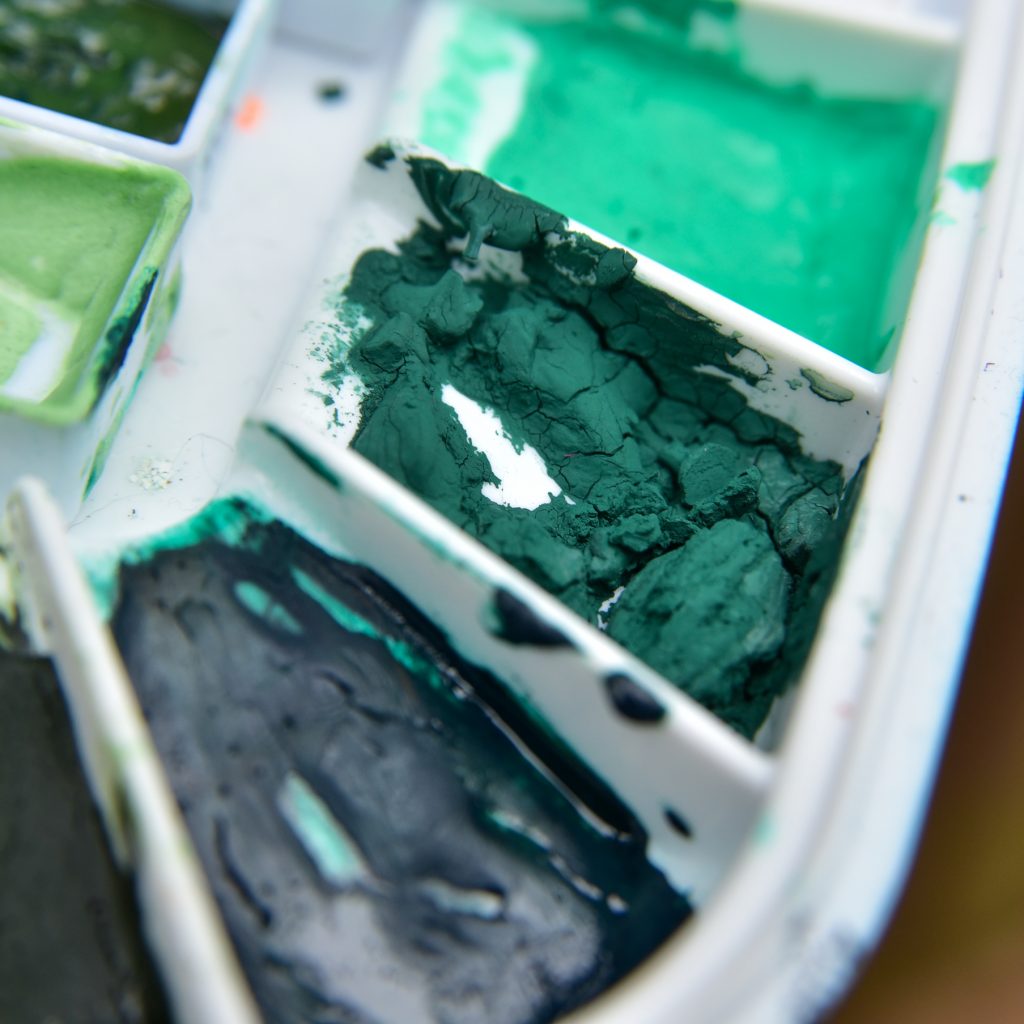
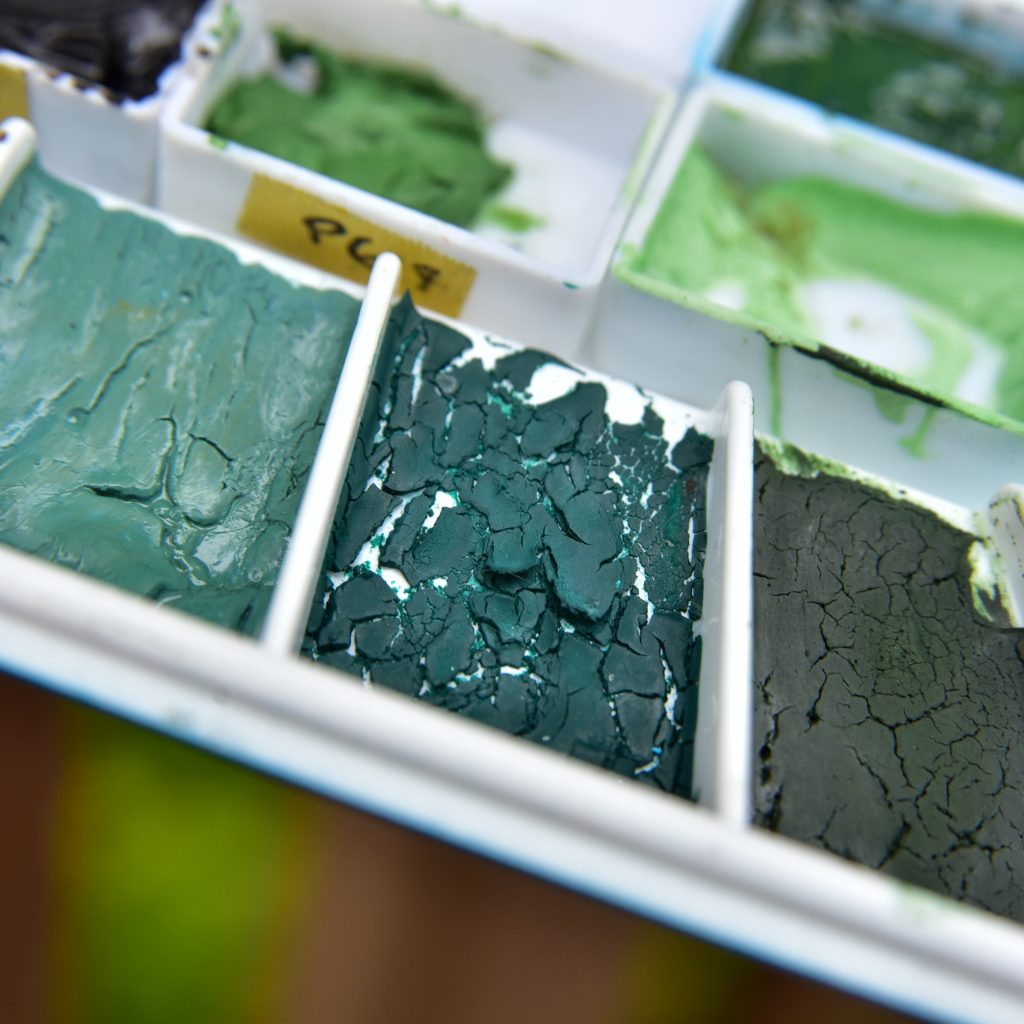
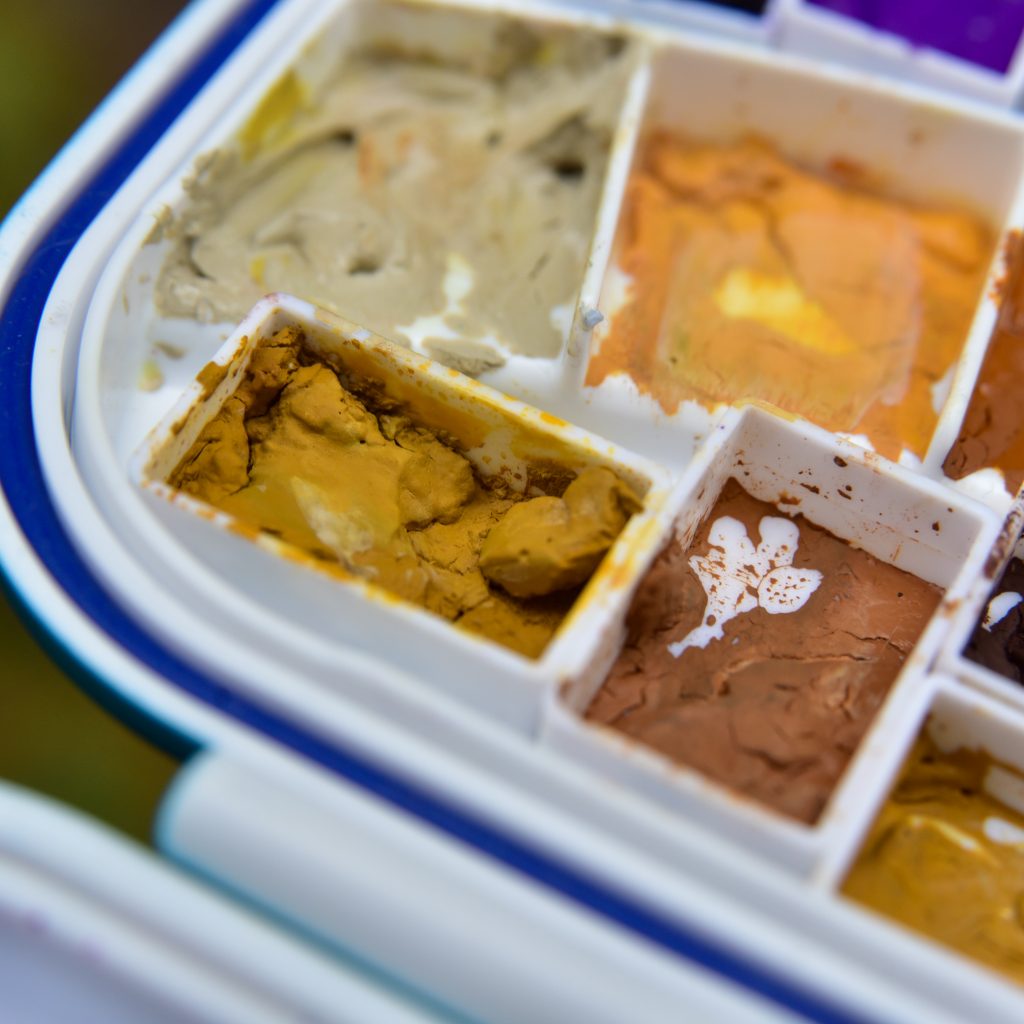
Some of these paints do crack, even with something added to them. The ones that I have had the most issues with are M Graham Viridian, Schmincke Cobalt Green Deep, Holbein Yellow Ochre, and W&N Vandyke Brown. I have refilled nearly all of these slots multiple times throughout the years and those colours always get a bit clumpy. The only issue that it leads to, though, is that the big chunks will dislodge if you invert the palette. Otherwise, they’re totally useable. I wet them with a dropper as with all the other pans, and they turn into beautiful gouache all the same.
Here are some of the things I believe have helped with the cracking:
- The blending medium/synthetic ox gall/glycerine.
- I have tried both Winsor and Newton Blending Medium and QOR synthetic ox gall and they must be very closely related products because one is not better than the other except that the QOR one comes with a dropper attached already whereas I needed to get a pipette for the W&N one. When I make my own gouache from pigments, I use a tiny bit more glycerine and it works as well as those other products.
- It’s also important to mix it in. I use a pottery needle to do this inside the pans. A toothpick would work too, I’m sure.
- Do not fill the pans.
- Halfway is enough, and it’s best not to let it pool in any one part of the pan/compartment. Half pans have deeper cracks than full pans because of the surface area.
- Spray them all!
- I drop water into the wells I know for sure I’m going to use, but I spray the entire palette every time I use it. In that way, even those which I haven’t used in a while can’t get ancient and dry.
Conclusion
Drying gouache into a palette is one of the best things I’ve done in my artistic life. Second only to making my own paint out of pigments. I wish I hadn’t waited so long nor been so scared by the dreaded “don’t do it, it will crack and you’ll hate everything”. It stays opaque and matte, and best of all, I get to enjoy it.

One thought on “Dried Gouache Palette”