
The First Page of my Luchetti Sketchbook
The Sketchbook
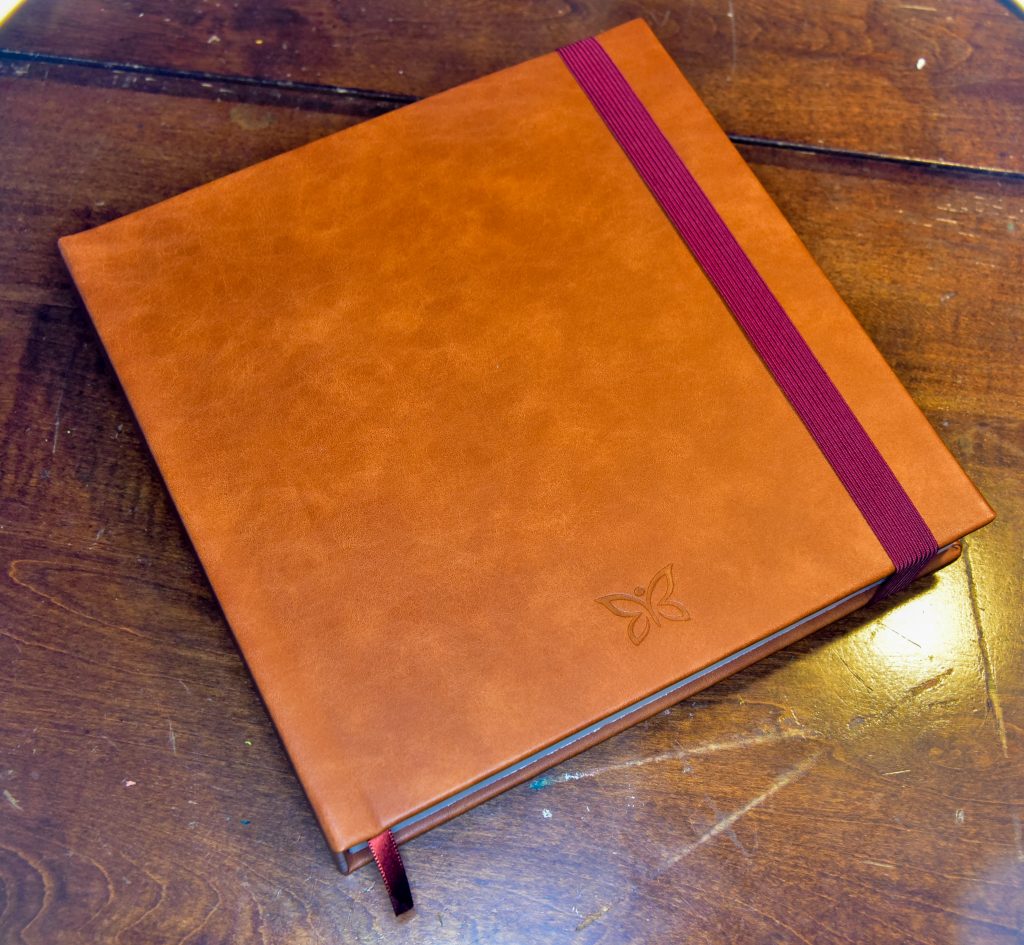
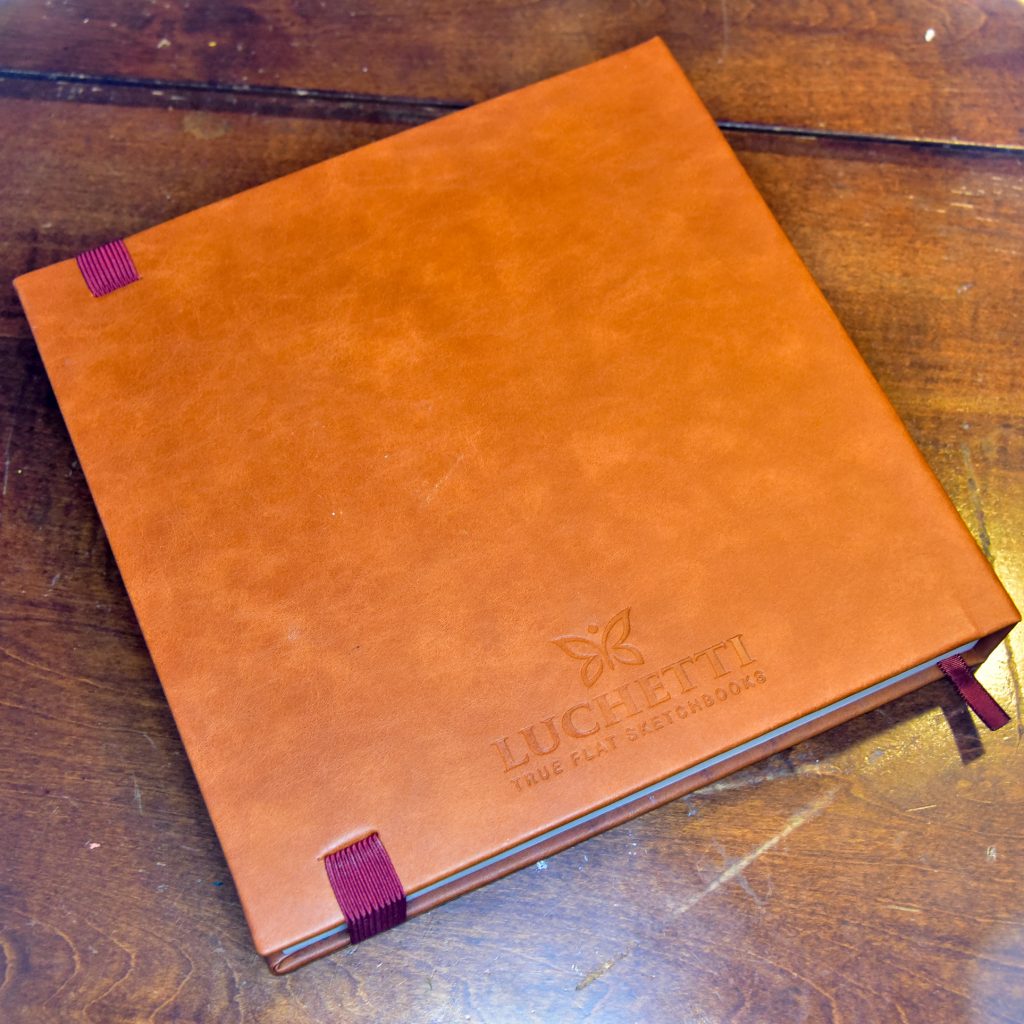
I had never heard of this sketchbook until I went looking for it, and I wasn’t even honestly looking. I was trying to figure out how to make my own 640gsm watercolour paper sketchbook, since I love the format of a sketchbook for first drafts and practice, but also want to practice more with thick paper. I’ve found that the heavy cotton watercolour paper is my favourite, but since it’s so thick I needed some advice on how to fold it into signatures (assuming a signature would be a whole one page thick).
But then someone mentioned the Luchetti Sketchbook, which not only uses fabulous heavy cotton watercolour paper, but also binds the sketchbook in a way that has no visible threads or gutters at all. I live for the two-page spread in a sketchbook, where the thread binding is. Those pages I generally make into a panoramic, but I learnt that with my square Stillman & Birn, I just really like the 1:2 aspect ratio, and was doing it even with a gutter. I never even thought there was an alternative! So this was an easy choice to make, it solved issues I didn’t think were solvable.
Update: I have put up another page from this sketchbook here where I try wet-in-wet watercolour.
Things I Noticed
- I prefer hotpress paper in most cases, and that was another thing I didn’t expect to find, but there it was. So I got the hotpress version, though a coldpress version does exist.
- It only comes in square format, which I dig, but after I finish this one, I’d probably have wanted an 8×10 or something landscape-bound. Still, I can’t complain, because I adore that 1:2.
- The price is exactly the level where some people deem something ‘sacred’ and only for perfect work. That’s a real trap that I know a lot fall into! I hope my advice here helps with any quality art supply with a price tag to prove it: you’re paying for the practice, so get what you paid for. Mistakes are valuable, using an entire page to learn how one pigment moves with water is valuable, making ugly paintings is valuable. I can see a hundred mistakes on my first painting in this sketchbook, but I have to make them to learn from them. I’m getting my money’s worth.
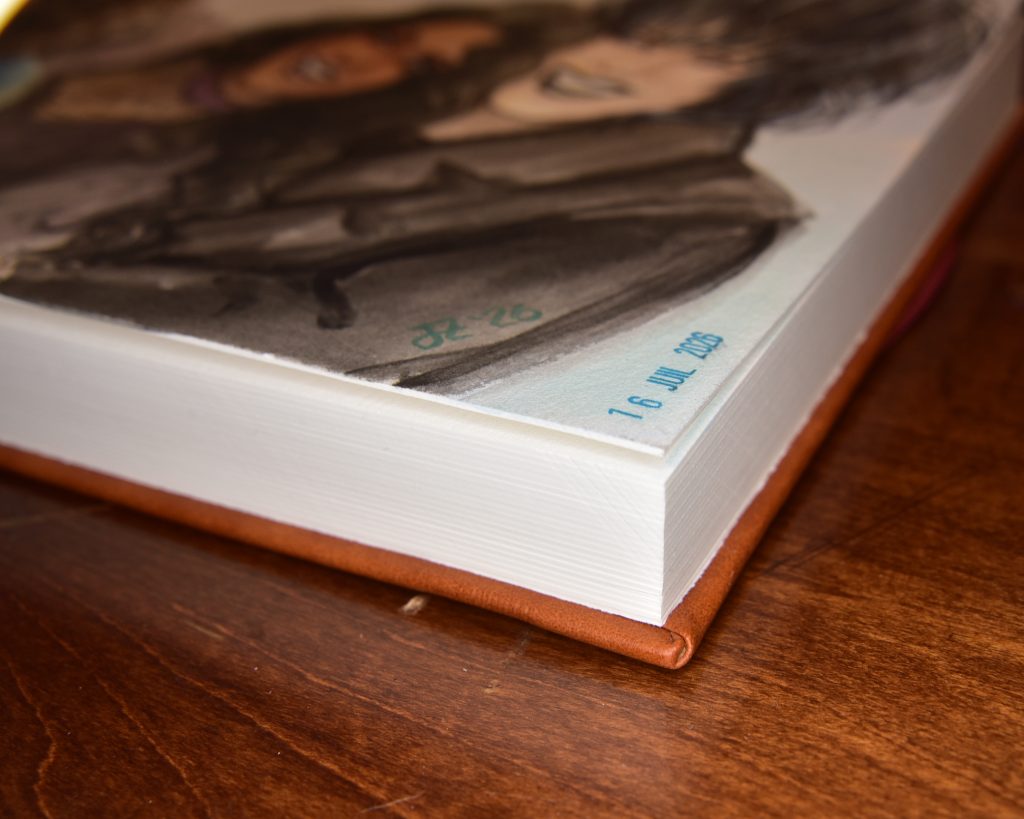
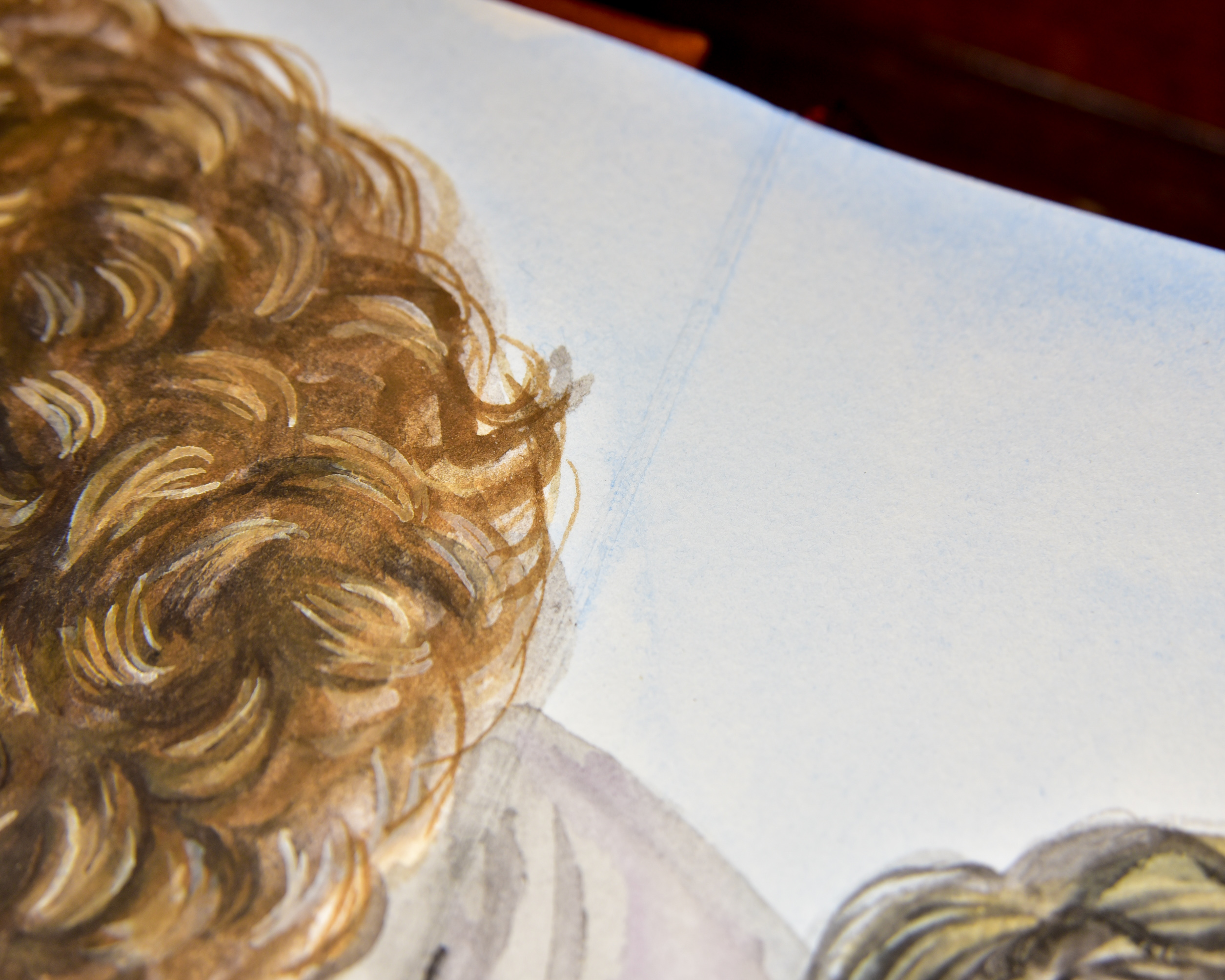
- The raised fold in the middle of each spread is leaps and bounds better than the gutters of a traditionally bound sketchbook, but it’s by no means invisible. I would say that it is equal to the two-page spread where the threads are visible, but vastly different. With the threads, you’re usually painting the threads and making them darker, starker and easier to see, with this you will have a line running through the entire middle rather than three or four separate thread bars. I prefer this, honestly, because if you’re keen to edit it out for any reason, I think it would be easier.
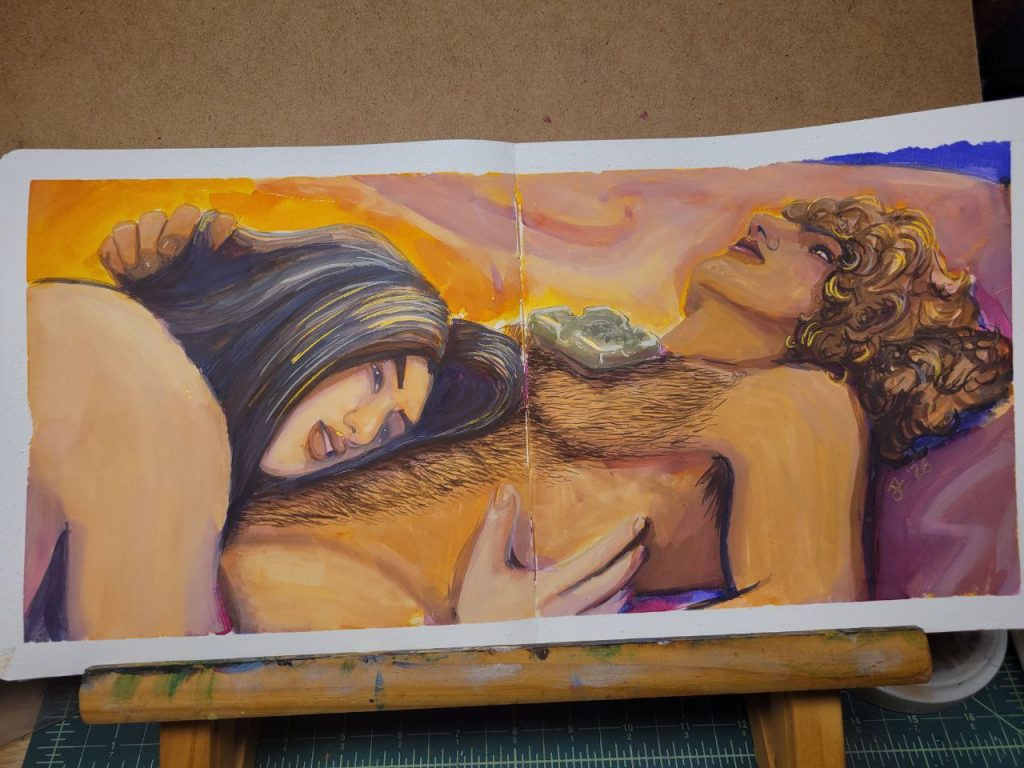
Comparison between the Luchetti binding and the 2-page spread of a Stillman & Birn Zeta
- The pages can take as much water as I expected them to, but because they’re not blocked in, and because they’re relatively small pages, they do curl a bit while wet. However:
- The elastic is very tight, and when it’s closed and set aside, the pages flatten back down.
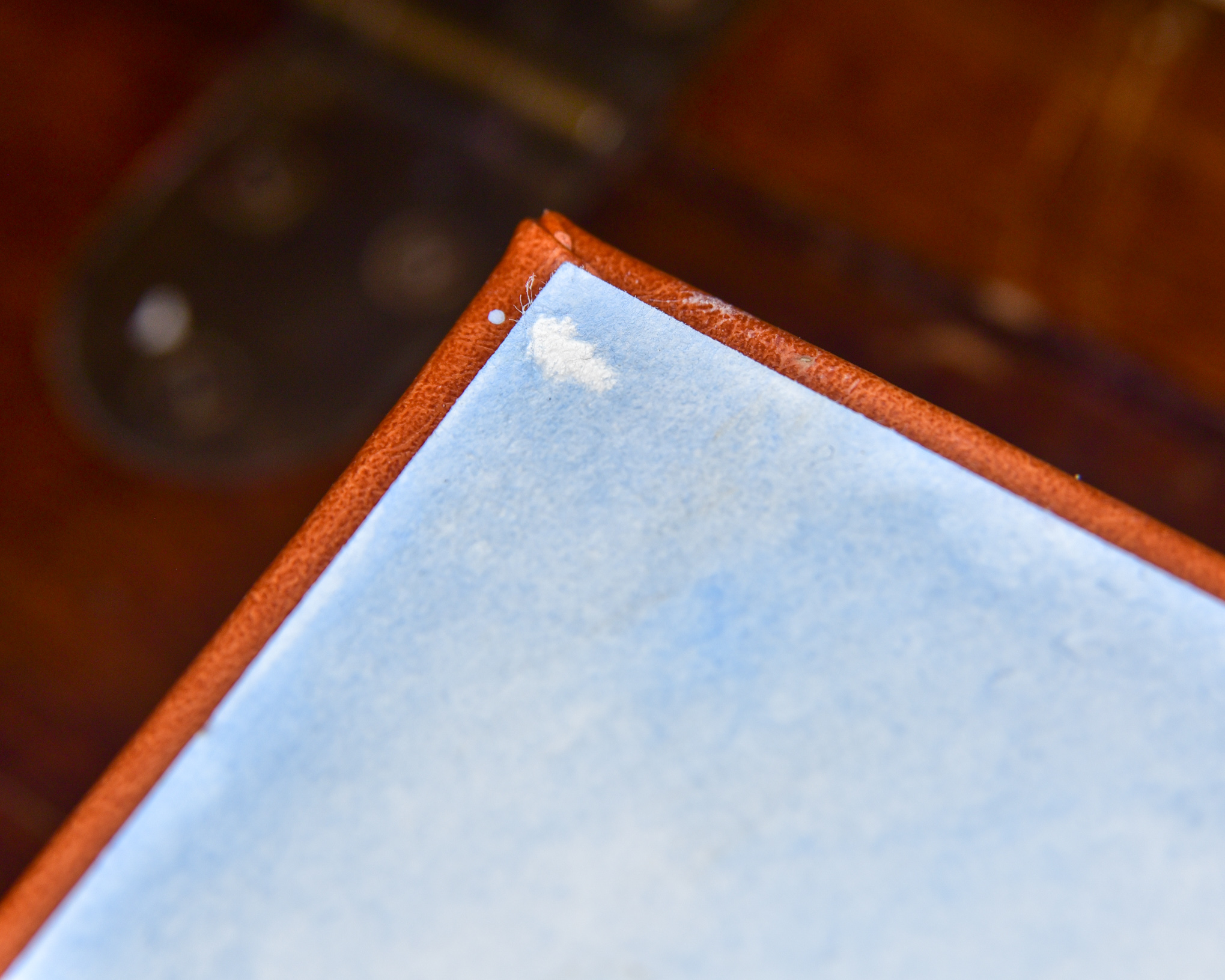
- Like other cotton papers, this stuff can tear even with low-tack tape.
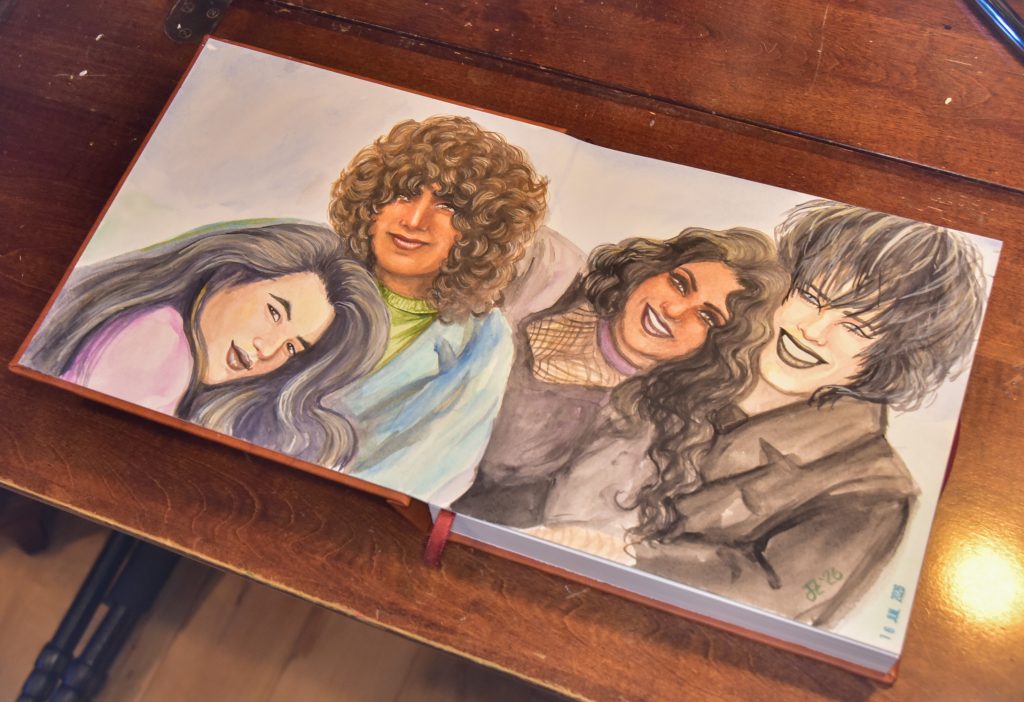
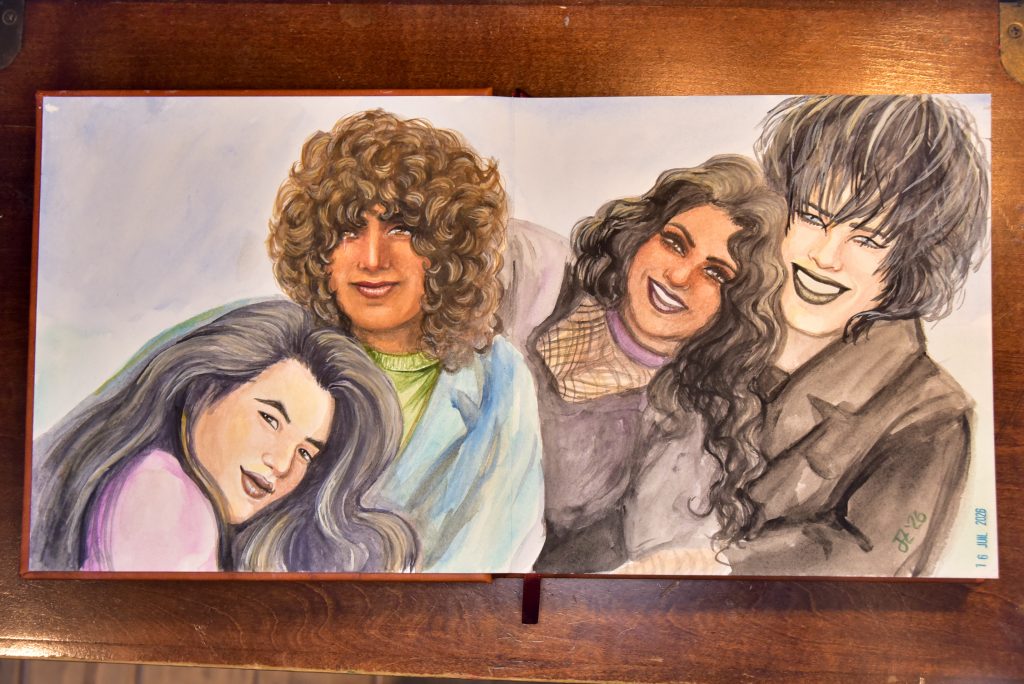
Jon, Mort, Sasha, and Rhys
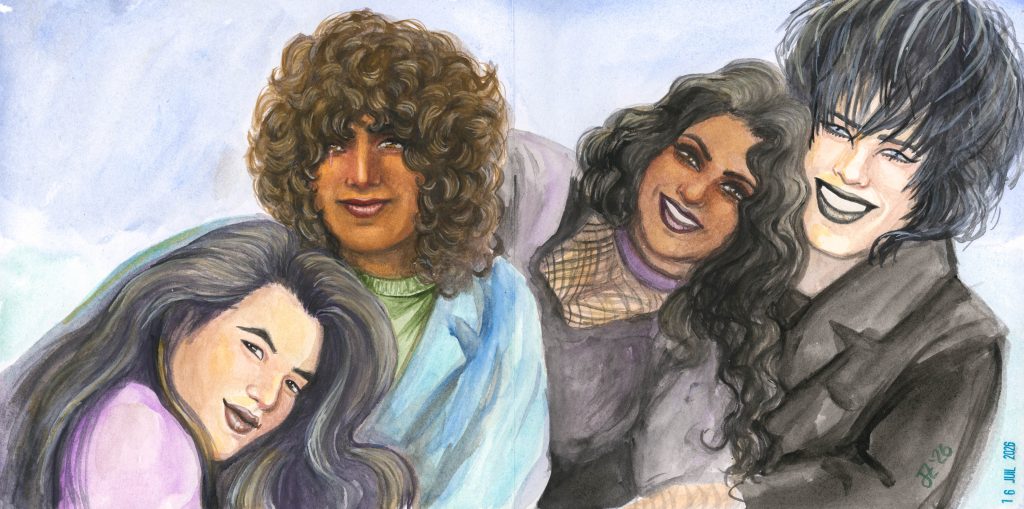
I did this sketch with gouache, and mostly focused on heavy water use and continued layering. It was a lovely experience, and of course I will be finishing the book with mostly 1:2 spreads. I’ll upload more about it as I continue. (It’s one of perhaps 5 active sketchbooks, though, so it won’t be quickly finished.)
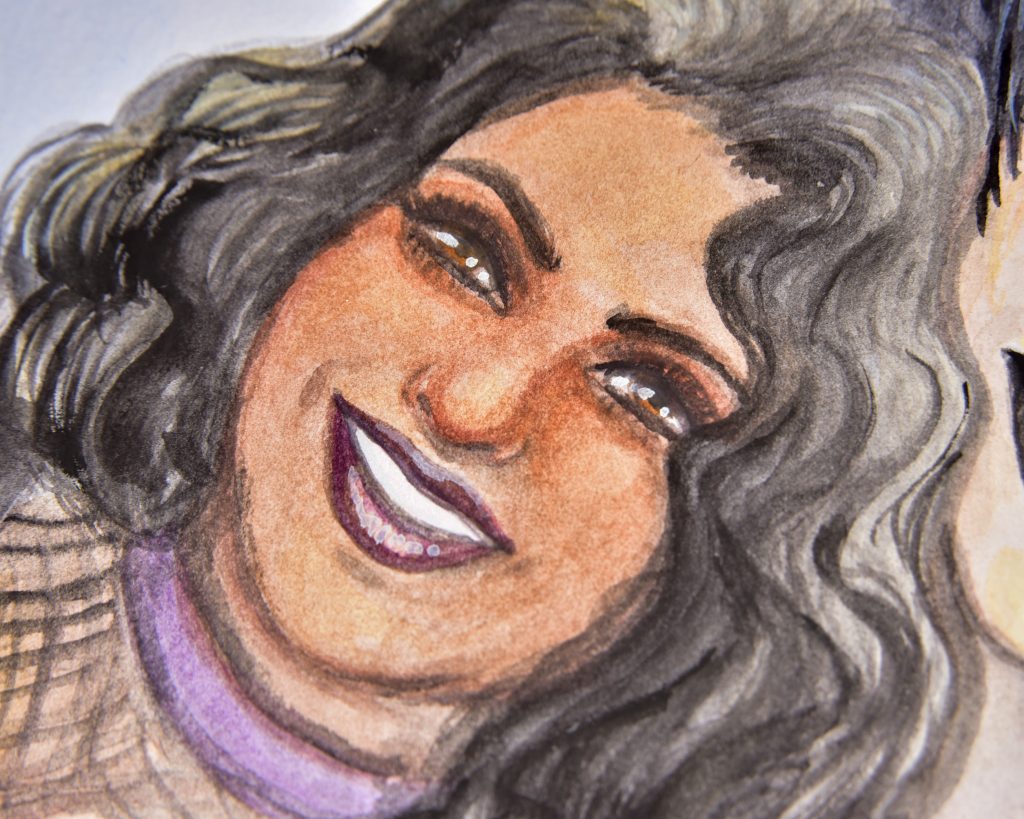
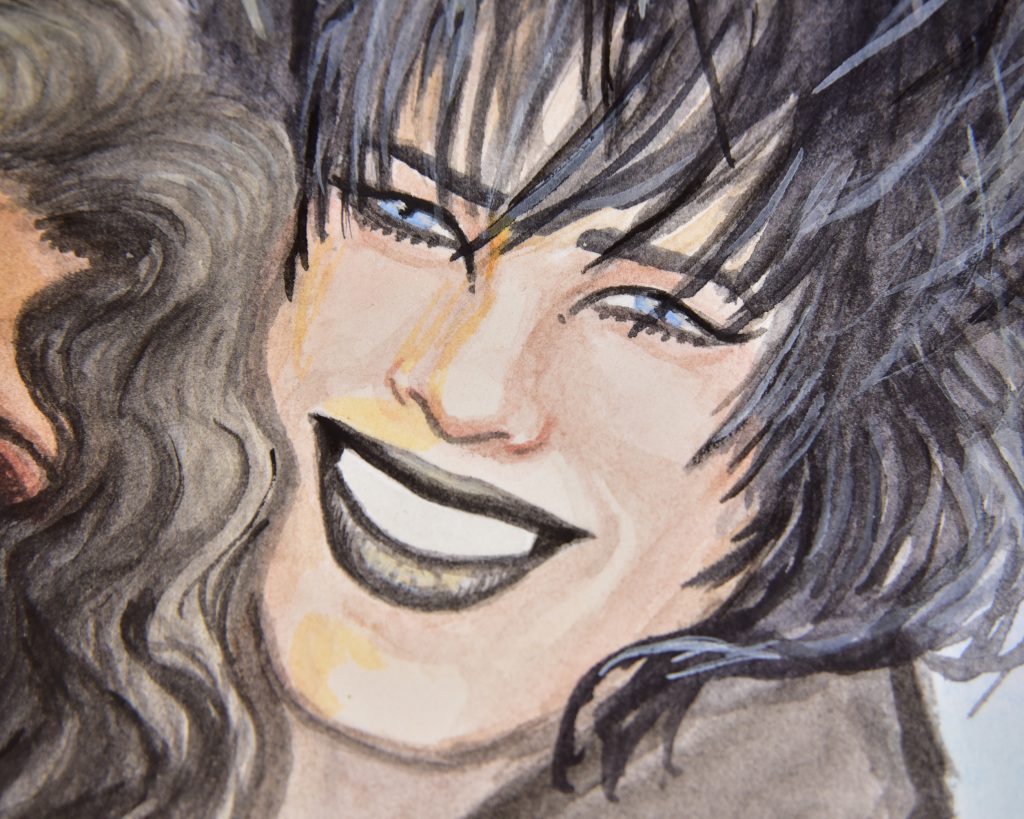
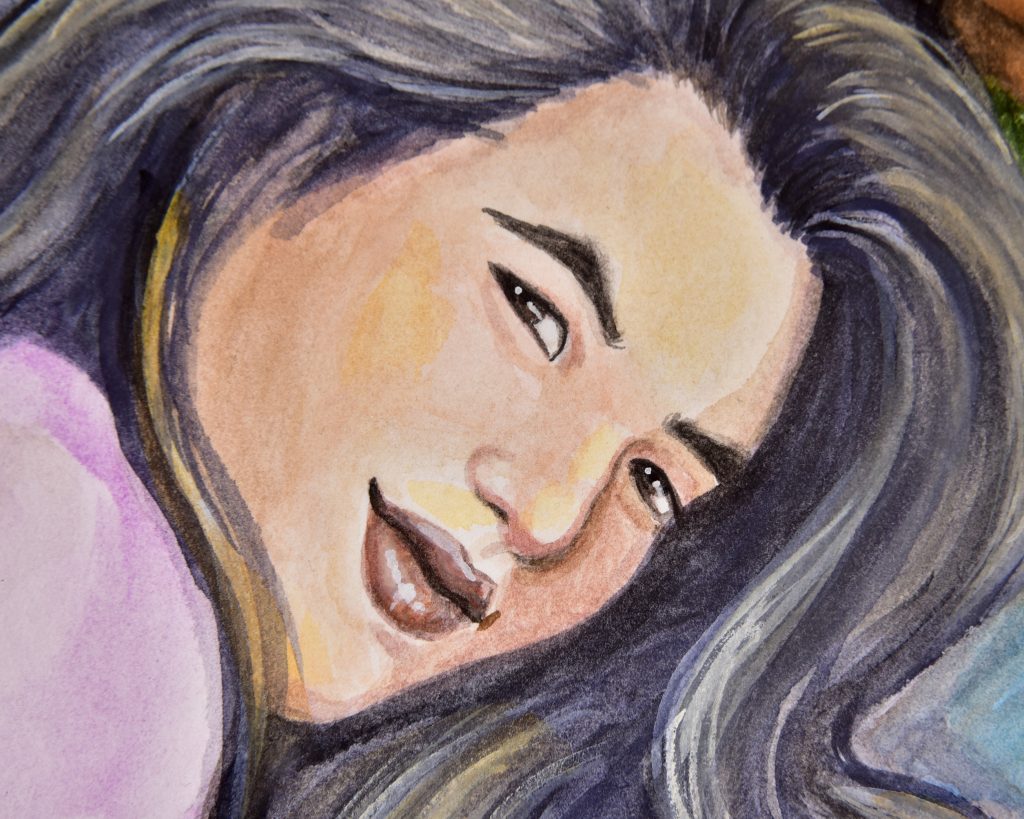
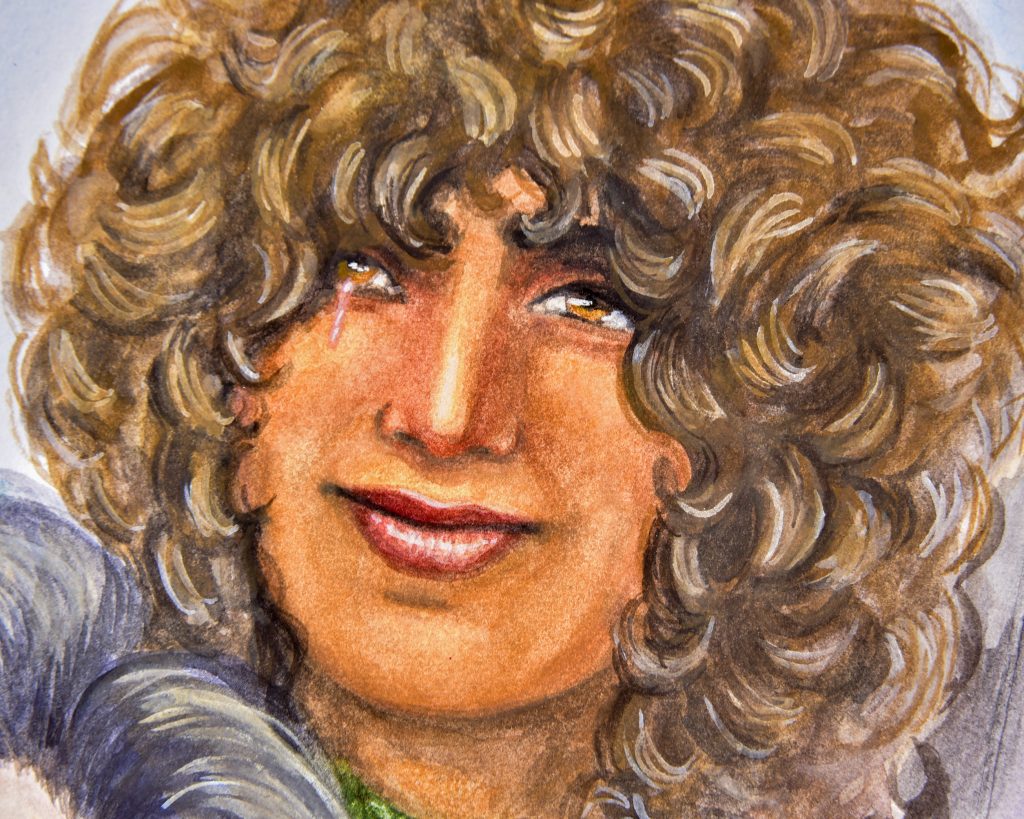
Despite Our Highs and Lows as Earthlings
I’ll soon be expanding into sharing some of the written pieces about this group of people I made up and constantly make art of. That’ll be over on earthl.ing. Subscribe there if you fancy finding out more.


One thought on “The First Page of my Luchetti Sketchbook”