Talens Pantone Markers and Ink
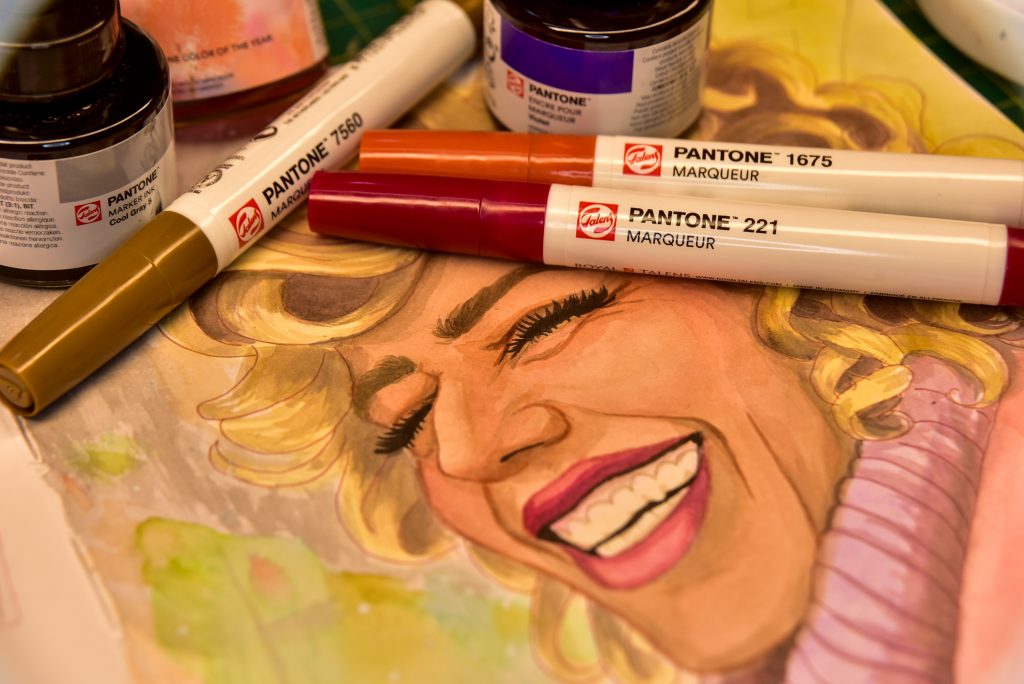
Inks are one of my favourite mediums of all time. Ink from fountain pens, technical pens, and markers are wonderful, but my ultimate favourite is to use inks with a paintbrush. I love these for that.
Pigments vs Dyes and Alcohol vs Water
Inks come in quite a few varieties, from the stuff in bottles to the stuff in markers and pens. Indian ink is the first ink I got familiar with in school, and alcohol ink is what I fell in love with as a teenager.
Most things called “ink” are dye-based. That means that they’re made with organic materials that are not lightfast, but can be brilliant and vibrant while they last. They can be water-based or alcohol-based. Most art markers are alcohol-based, like Copics, Ohuhu, and Letraset (now Winsor & Newton Promarker). Chartpak makes alcohol-based markers as well (but I quite like their xylene-based ones, the only xylene markers I know of.) Water-based dye inks include Kuretake markers (such as Real Brush), Tombow markers, and the vast-vast-vast majority of fountain pen inks. Also, there are some dye-based ‘liquid watercolours’ out there that behave similarly to ink, such as Dr Ph Martin’s Radiant Concentrated and Synchromatic, as well as Talens Ecoline.
Water-based inks are wonderful to use with a brush. Even if not in bottle form, but in marker/pen form, they can be drawn on the paper directly from the instrument and then softened with a wet brush, or drawn onto a porcelain palette and used like paint. Most water-based inks I know of are resoluble like watercolour to some extent, and therefore simple to blend.
Pigment-based inks are something I’ve only ever seen in water-based varieties (though I’m going to do some experimenting someday with pure pigments and alcohol). The first ink I ever knew was Indian Ink, which is pigment-based, and Faber-Castell Pitt Artist Markers are filled with that very stuff and are incredible. There are also acrylic inks, and pigment-based liquid watercolours (by brands like Schmincke and Dr Ph Martin). Pigments are inorganic materials, and have much better lightfastness than dyes for the most part.
So, where do Talens Pantone Markers and Inks fit into this wild smattering of categories? They are water-based and pigment-based, like Indian Ink, but they have something very different about them.
Uniqueness
These inks have two qualities that I adore and have found in no other pigment-and-water-based ink: they’re matte, and they’re permanent.
Dye-and-water-based inks can be matte, but are generally resoluble. Indian inks and acrylic inks are also waterproof when dry, but they are both very glossy (except for some specialised black inks). But these come in 108 colours aside from black and dry into amazing matte transparent layers.
They’re discontinuing these markers and inks, I think perhaps because they were advertised to the wrong crowd and have a high price tag outside of Europe. These are *not* like alcohol markers at all.
What They’re Not For
You won’t get blends with these easily while using them as markers. They’re nothing like blending a Copic or a Kuretake. They dry incredibly fast, sometimes more quickly than you can get yourself the next marker open that you want to blend. There are ways to help this, such as using them on wet paper, but that’s another issue because they are finnicky with the paper they’ll work on, I’ve learnt. They tear lightweight wet papers quite easily.
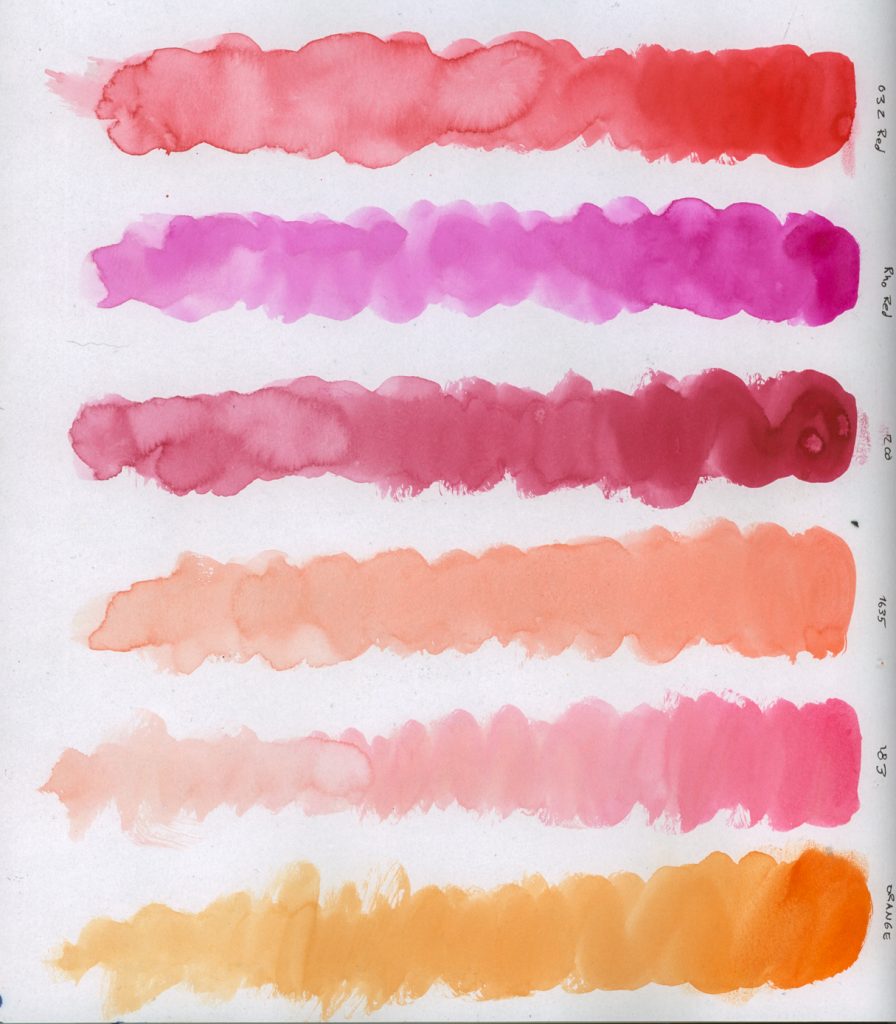
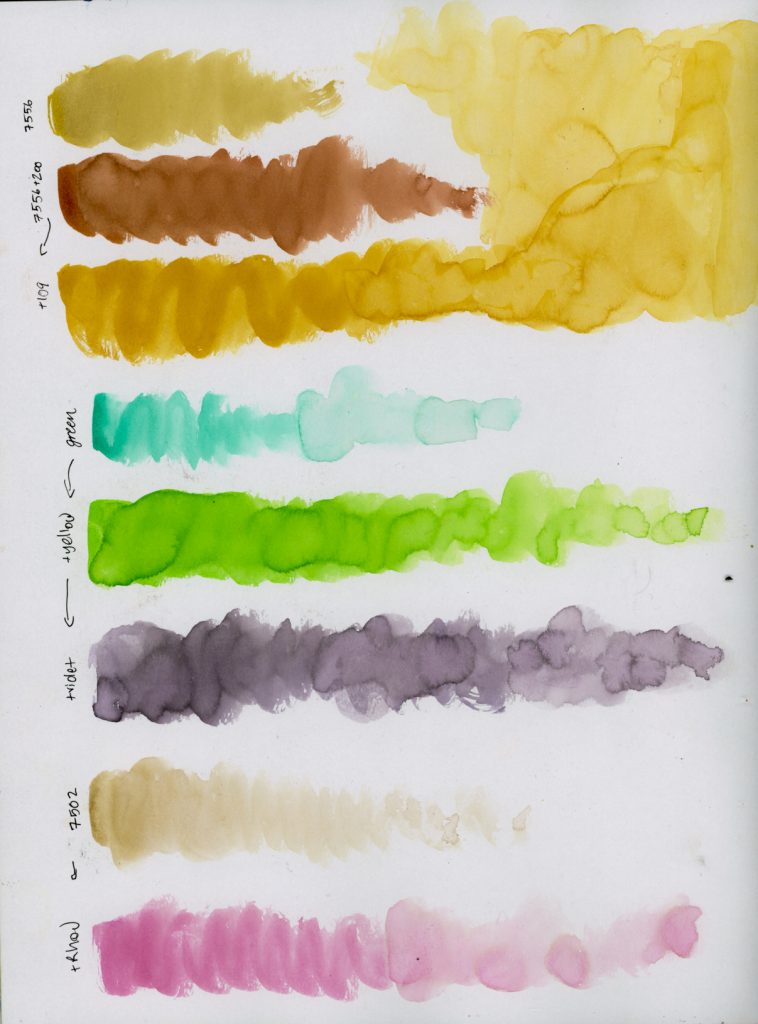
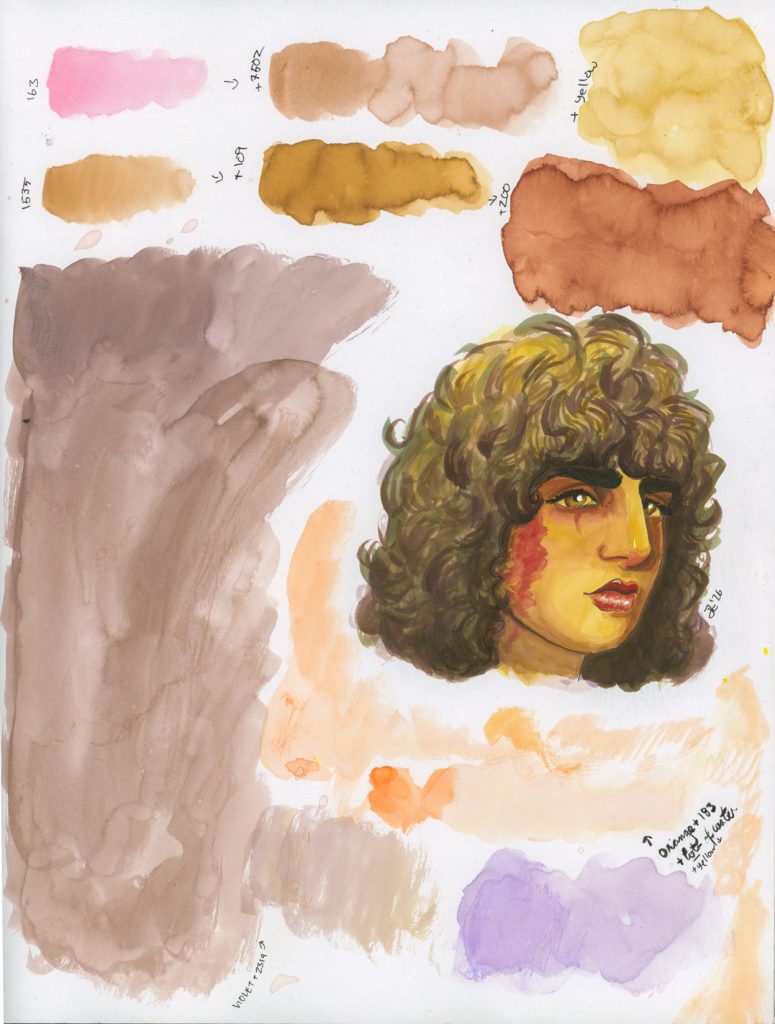
The first paper I tried these inks on was inside my Rendr sketchbook. I only had the bottled inks at this point. I’d purchased the ‘basic’ colours (same 9 available in the ‘primary’ marker set) and a couple extra reds. I assumed they were going to bleed and feather, so I went with what I use for markers. They look fabulous on this paper, I think, and adding water to them from this stage looks incredible. Painting them from a palette is great, and mixing can absolve a need for having all the colours.
The only downside was “oh wow this paper warps terribly when wet!” I did four paintings with them in this book before I decided to try something else. Starting with my default sketch below, which made me completely fall in love.
Forest Kiss

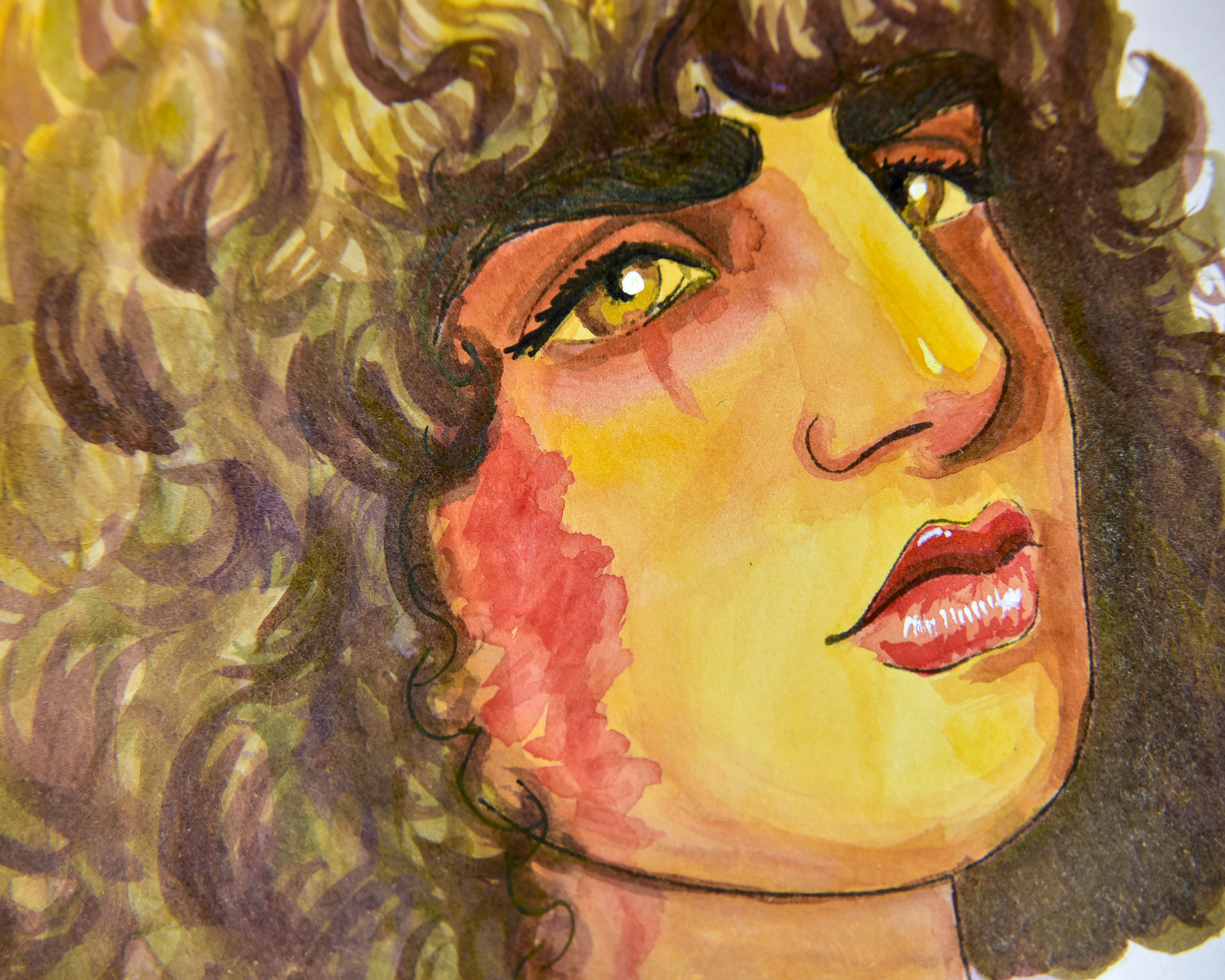
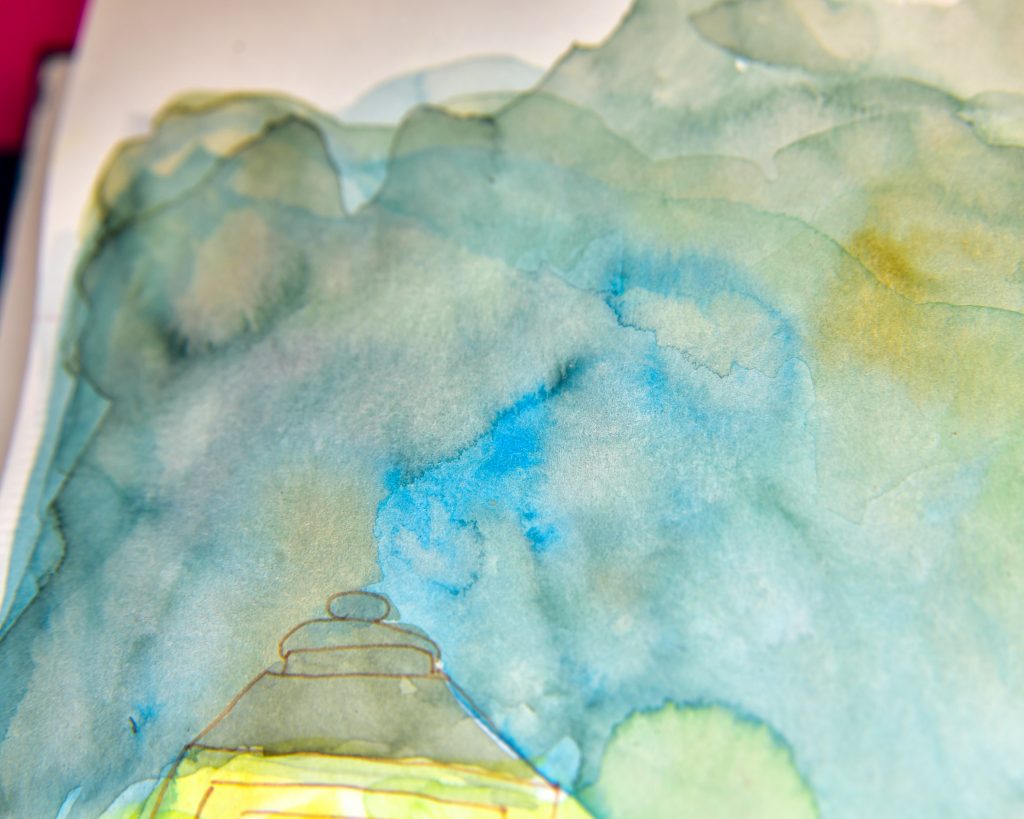
I did this painting in my Rendr sketchbook entirely from a porcelain palette. I used the bottled Talens ink exclusively, no markers.
In general, I was just as in love with the process during this painting as with the first experiments, but things weren’t getting deep enough for me, everything seemed much too light and highkey. My first thought was maybe I should get a couple of the markers in dark colours to really accent things, and build contrast. I still haven’t gone over this with markers, because I think the real issue was the paper and my scant use of the ink. I could have used it less diluted and with a firmer brush. But, best save that for better paper.


Mort at Rhys’ Wedding

This was also done in the Rendr, and I hardly like anything about it. For one thing, to deepen the blacks, I tried using a Pentel Indian Ink pen as well as some fine liners, but the gloss is so different and the blendability is non-existent and it was a terrible idea all around. All I like about this one is the effect around the smoke in the sky. Also the skintone is decent, and the backlighting is alright. But this ain’t it.
Shorn
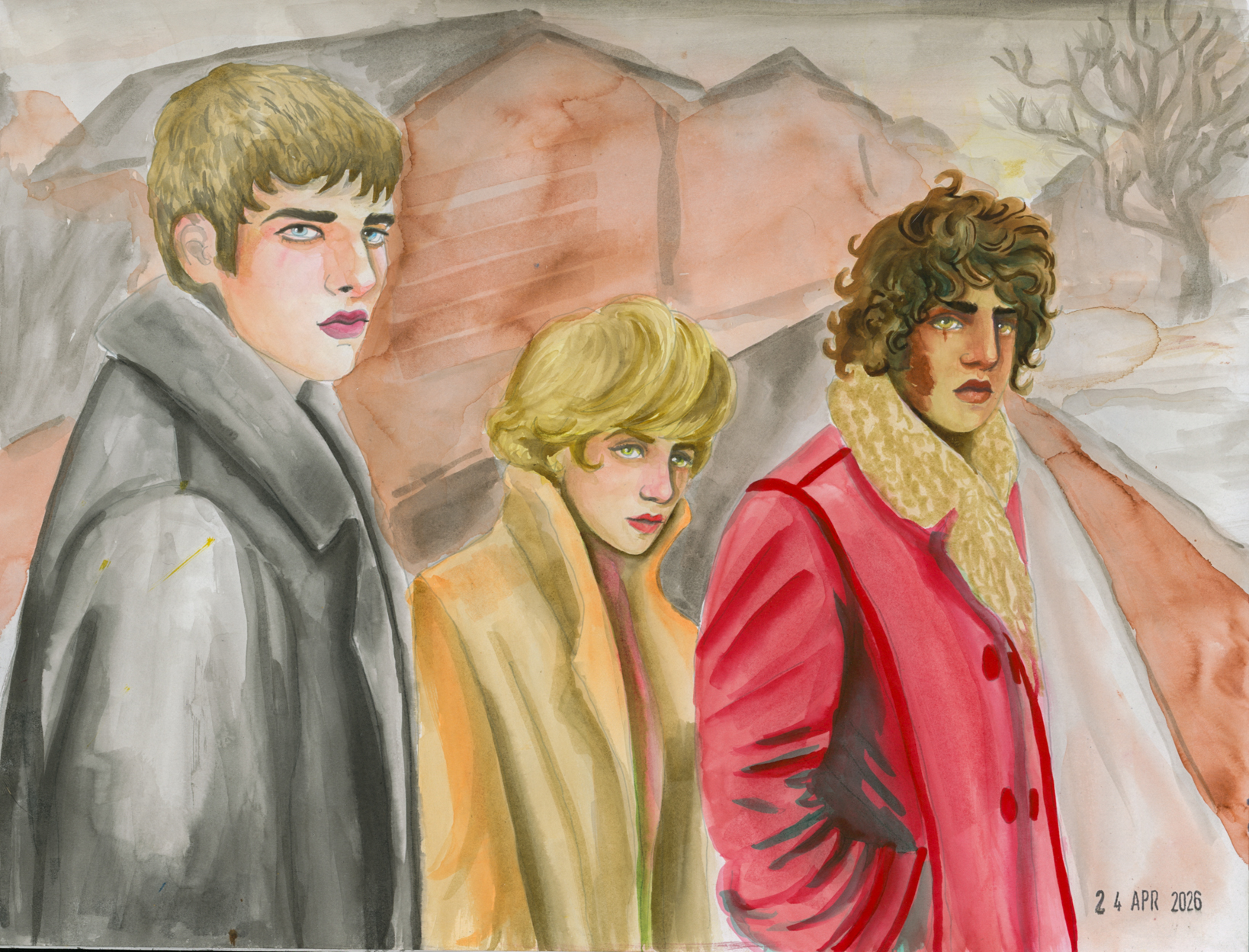
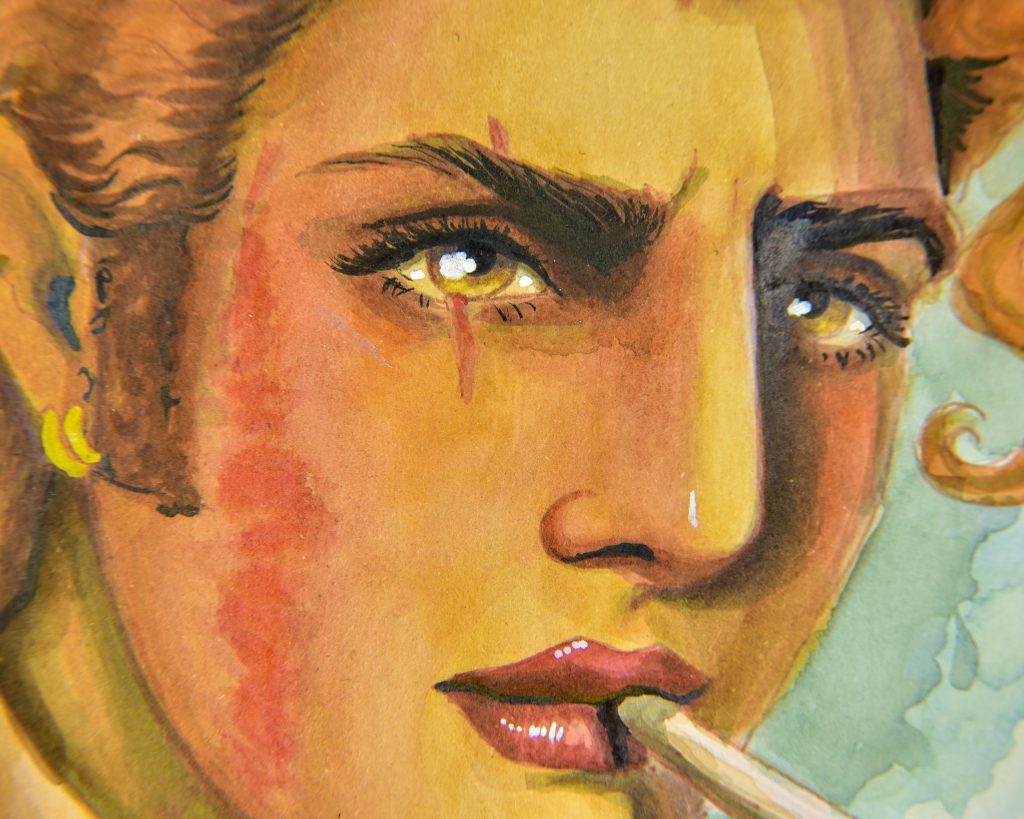
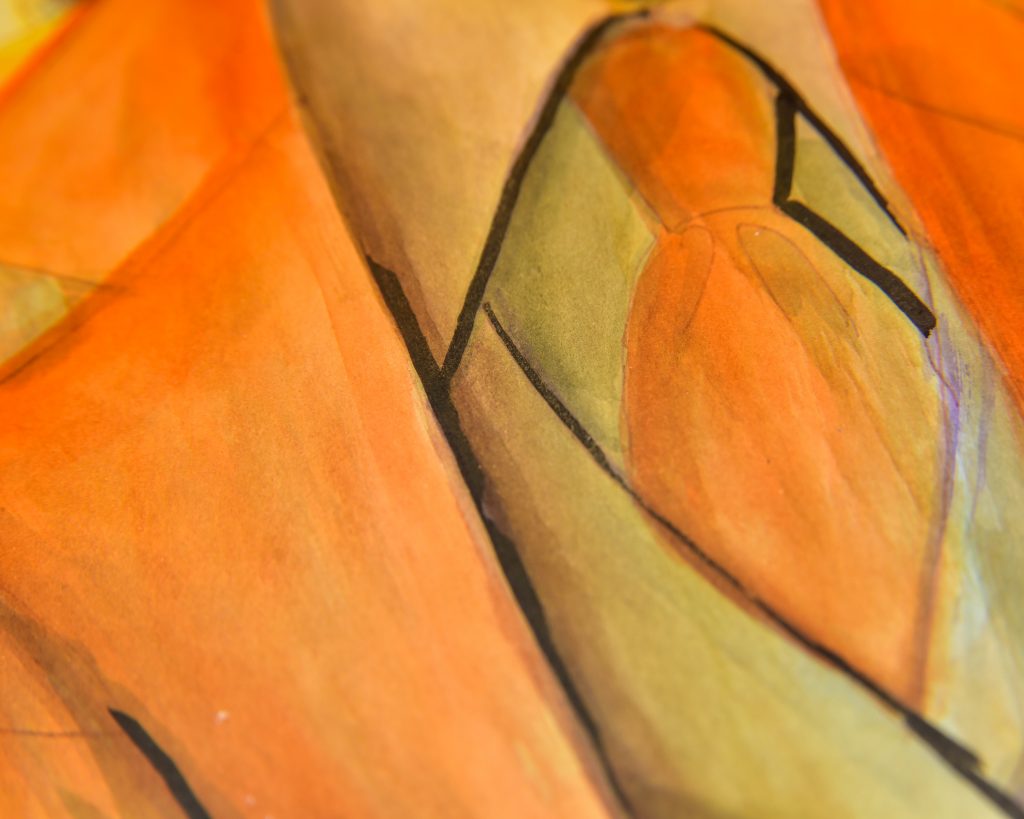
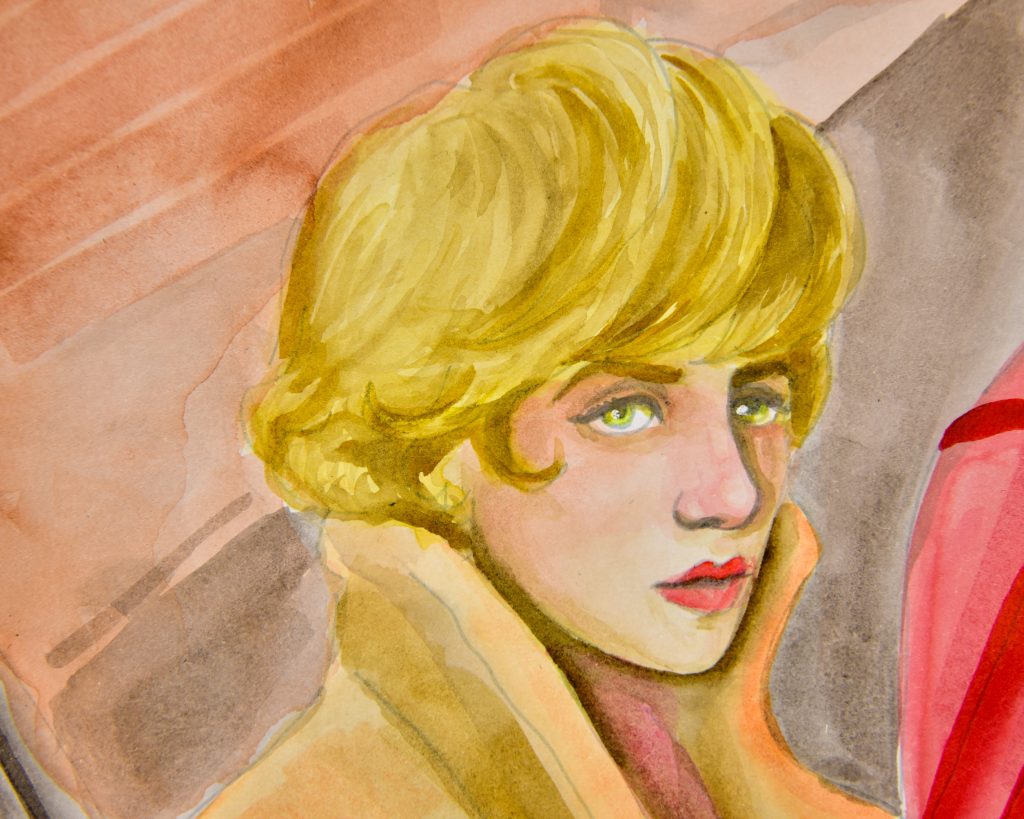
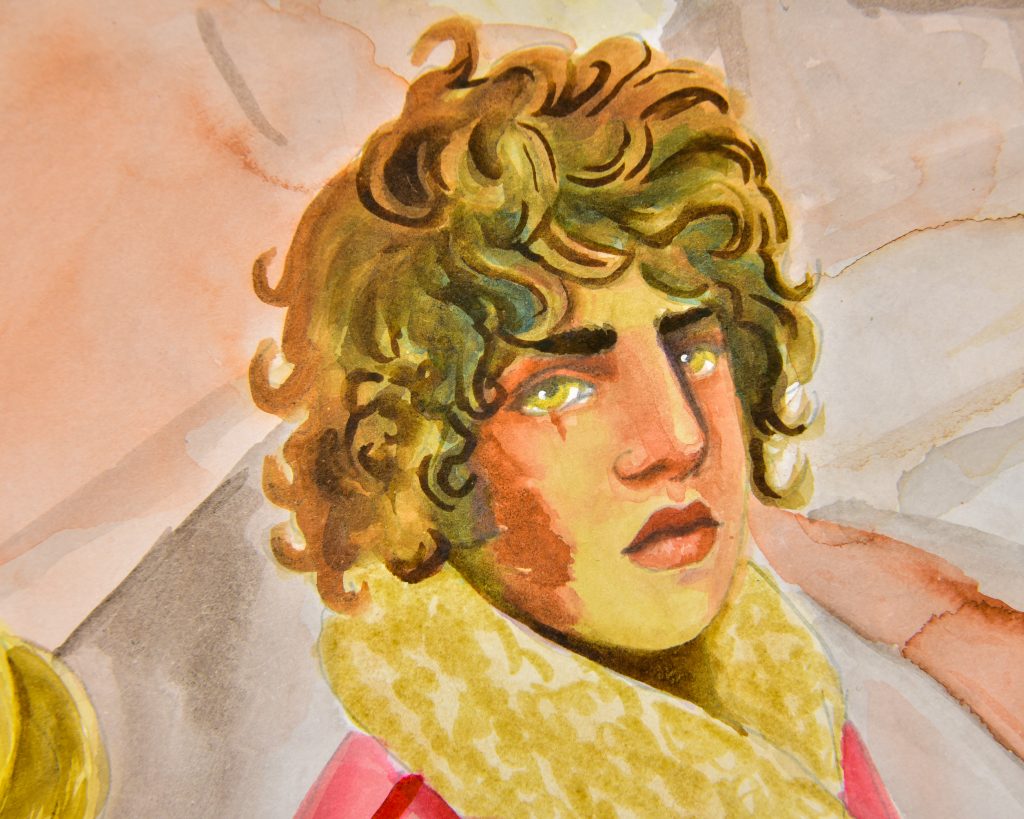
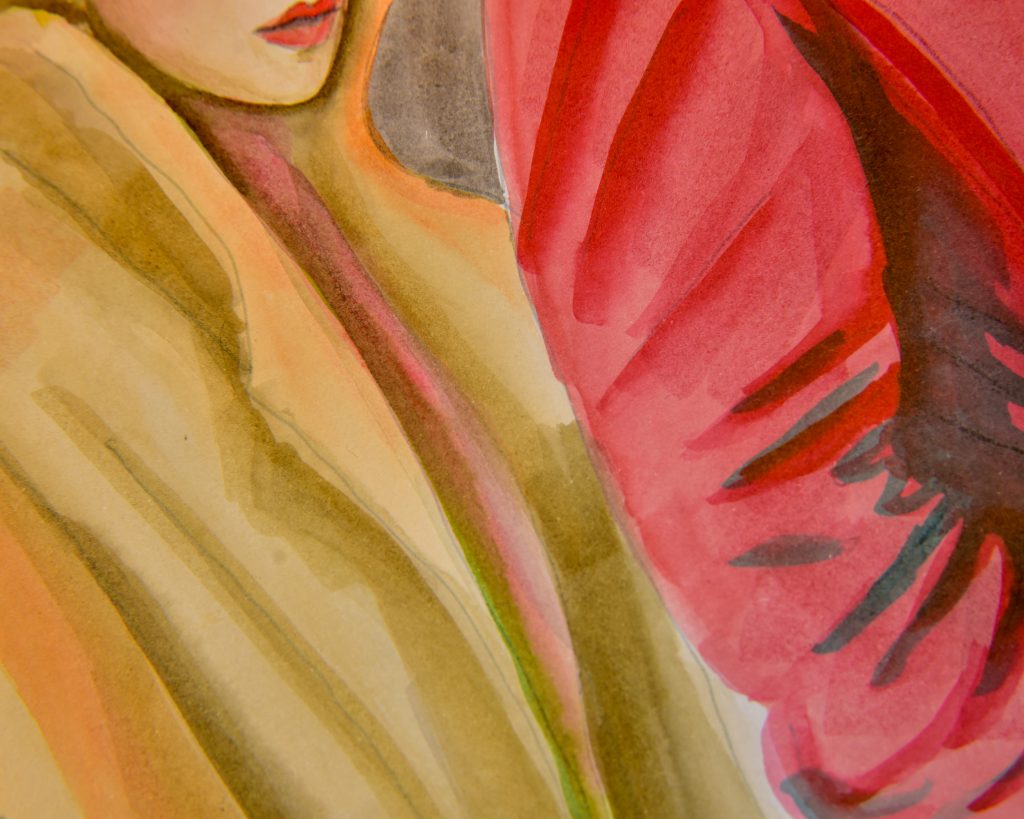
This is when I got some of the markers. There was a great sale on them, they were like 3 dollars each, so I jumped on the opportunity and used some markers along with the bottled inks. Mort (in the red coat) looks fabulous in this, I count that as a total success. This is where I learnt that the markers dry *fast* and that’s why I gave up on the background for the most part. But, if you draw them into something that’s already a bit damp, they make great transitions. Rhys’ (black coat) hair is a great example of this, I love that look.

A Snog on Watercolour Paper

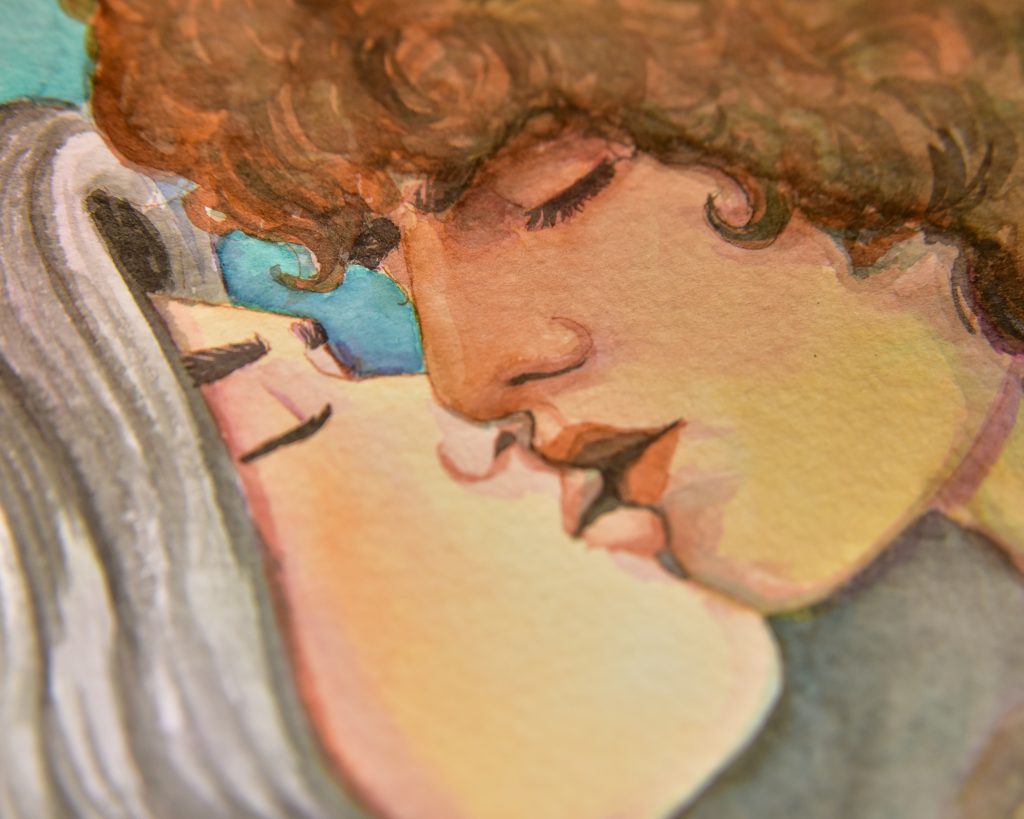
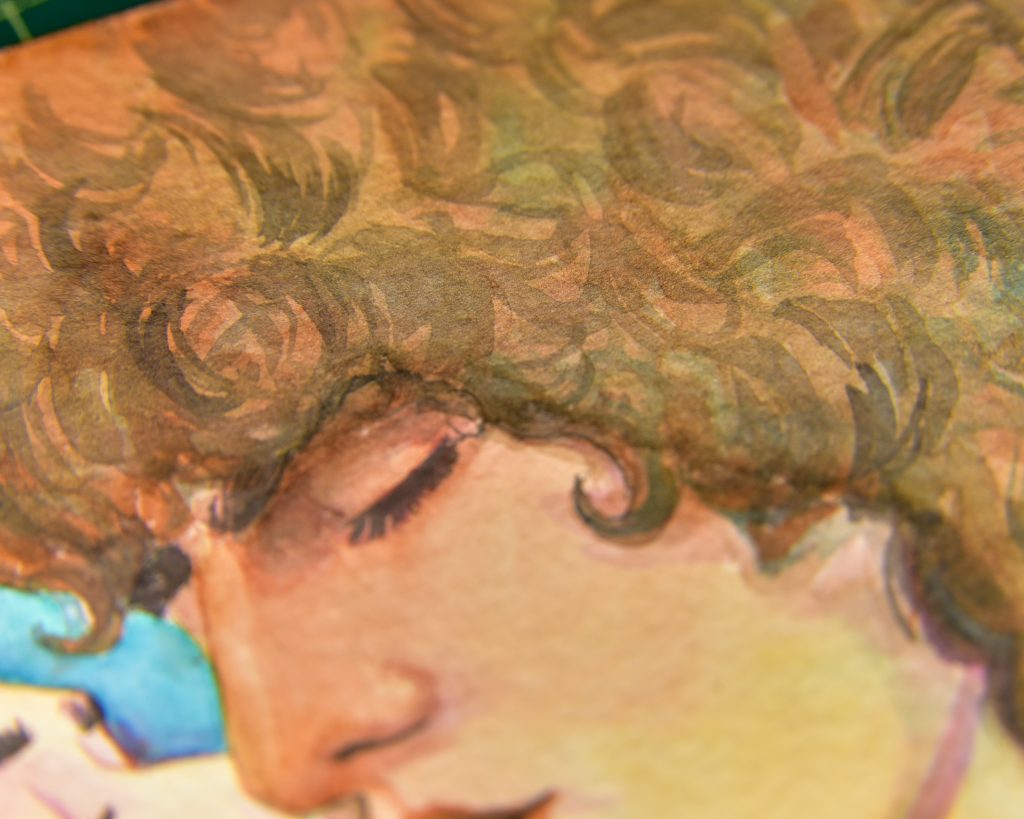
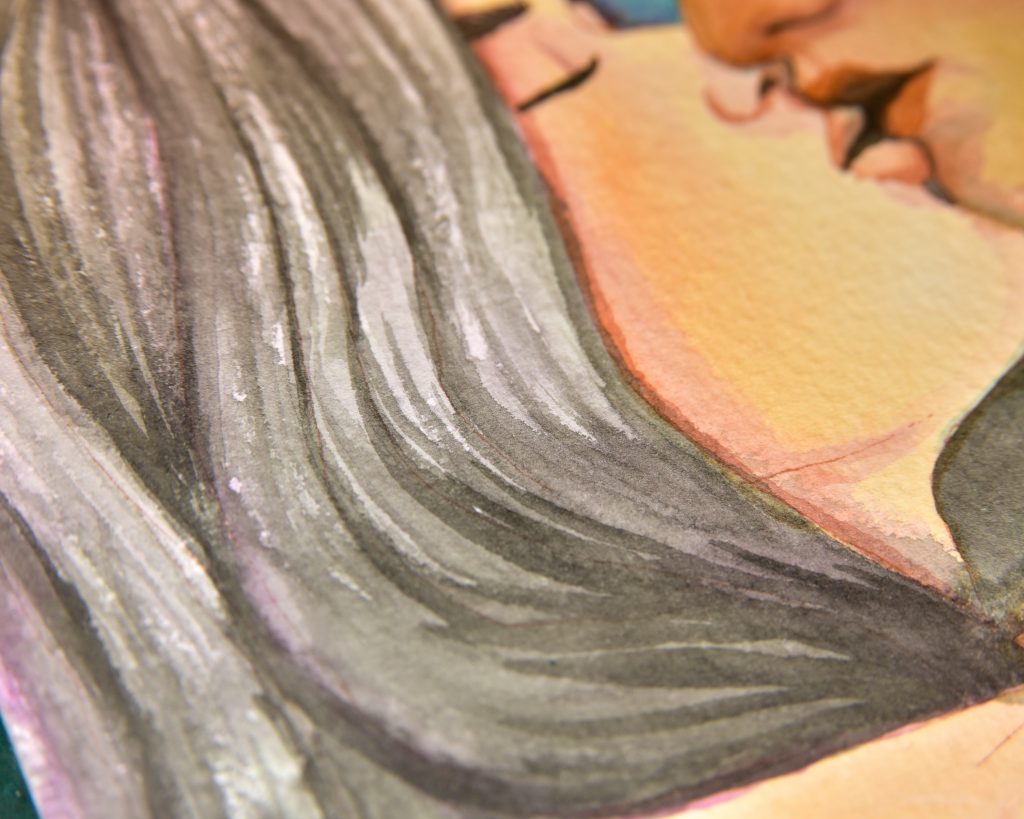
This is where things really started to get exciting and wonderful. I thought, since I’m using these like paints, let’s use them on cotton paper. This is a small square sheet of Magnani Italia paper. I used mostly a palette for this, but also drew into the wet paper, especially the hair. I absolutely loved this (it’s a version of a huge panel painting I’ve been working on for a while in oil). The only downside I found was that there aren’t as many tide lines and hard edges. Obviously the cold-pressed nature has a lot to do with that. Also, I think Mort’s skintone is a bit too green in parts.
Zeta Sketchbook
I think my favourite sketchbook of all time is the Stillman and Birn Zeta. Sometimes I prefer textured cotton paper, but in this sketchbook I can try pretty much anything and get a great feel for it. Since I use it as my main experiment book, I thought I should try the markers and inks out in there. By this point, my birthday had passed and I’d collected every single colour in marker form and a few more ink refills, so I was ready to use these in all the things. I was shocked by how fabulous it looked in this sketchbook. No bleedthrough, either.
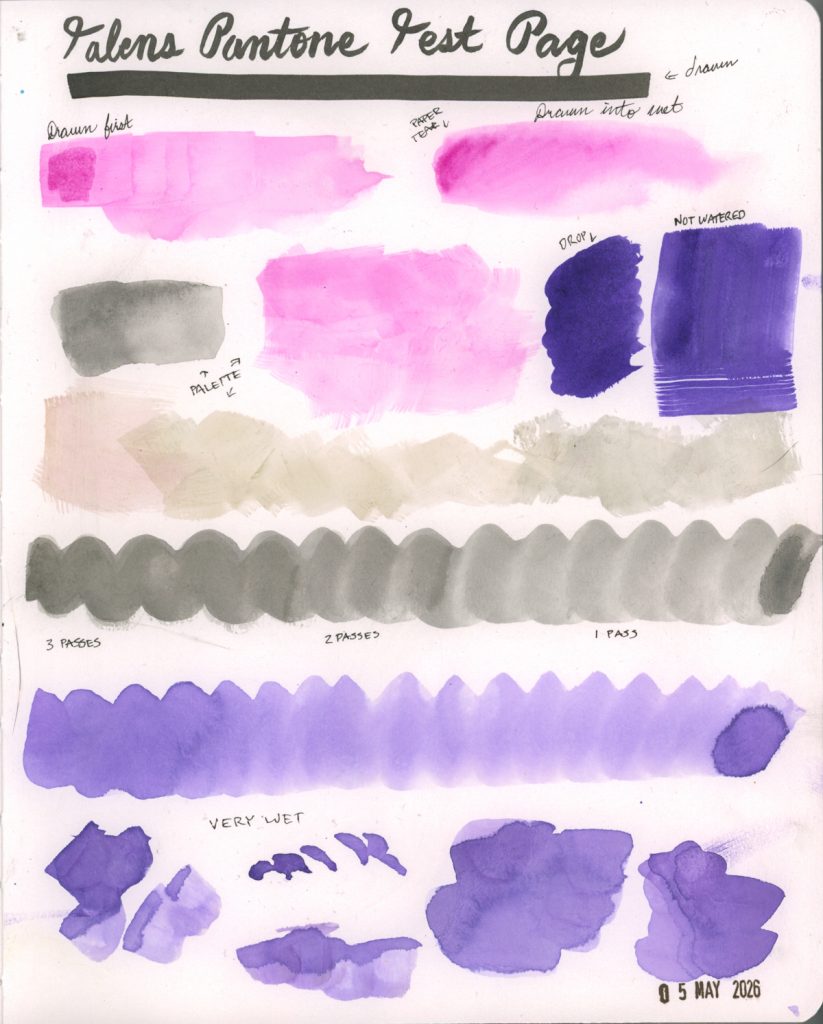
Aminah

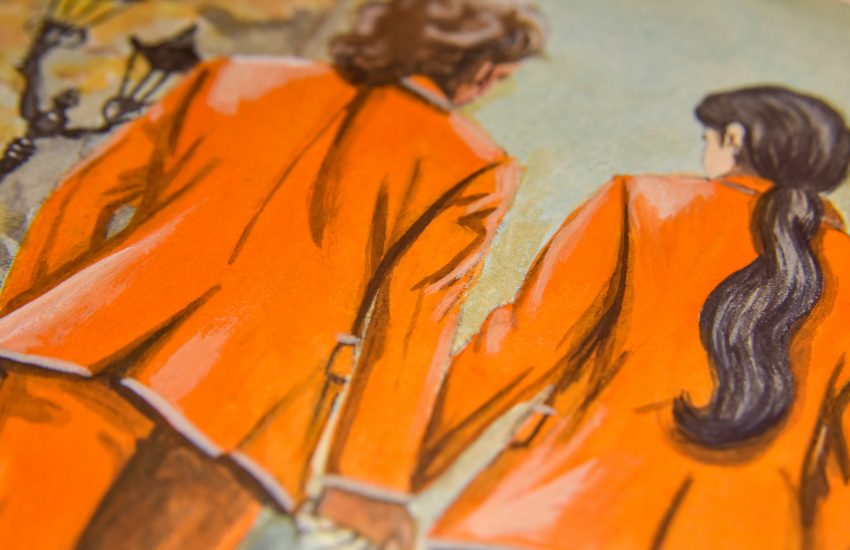
This is the painting I’m so far most satisfied with out of all of my first attempts. The biggest thing is that I find the paper pretty perfect, but my technique is improving. One thing I’ve learnt is to layer even more heavily, as in get five layers just of a midtone to pump up the saturation. Another important thing (something I need to remember with all my water-based painting) is to let it dry in between stages.
If worked too heavily, this paper will tear. If drawn into while wet, it can pill a bit. But for painting off of a palette it’s a dream. The lines are so crisp (just look at the shading around the left eye, I love it! And on the lapel of the coat!)
I still need to work on my backgrounds, but this is a skill issue not a tool issue.


Do I Adore Them Still?
Yes! Even more than before. But for this sort of painting usage only. I don’t like using them as markers very much (yet), but painting with them is phenomenal. I also have a small pad of the paper which Royal Talens made for these inks, so I will see how it faires in comparison.
It’s a shame that they’re not making them anymore, because there is nothing else I have ever found that’s quite like this. I was thinking of perhaps adding aquafix to watercolour to get a similar effect, or maybe adding airbrush medium to acrylic gouache? But that will increase gloss. Either way, I’ll enjoy these while I have them and when they’re gone, I’ll remember them fondly.

Thanks for this review, it was very informative! It’s really difficult to find any information about these markers online, since as you said, it seems like they haven’t really caught on outside Europe, maybe due to the marketing or the high price. In my opinion the price is really high even in Europe…
Anyway, are they really discontinuing these?? Ugh, I’ve had them on my wishlist for like 2 years now. On one hand, they’re half off at a local art store now. On the other hand, if I really like them, I’ll be super pissed that I can’t buy replacements. 😅
Would you suggest buying the ink bottles rather than the markers? In your opinion, do the colours mix well in ink form? The ink bottles themselves are still normal price (about 12€ per 30ml bottle), but the markers were like 87€ for a basic 27-set, 29€ for the 9-sets. So I’m thinking, it might still be cheaper to buy a basic range of the ink bottles and just mix my own colours, since the bottles last longer anyway…
How do these compare to the Faber-Castell Pitt Dual Markers, have you tried those? They’re indian ink too, right?
I’m happy to see it was helpful! I couldn’t find much info either, so I thought it best to share. Depending on where you are in Europe (or the world, because online ships to a lot of places), there is a Spanish art shop called Hartem that has them for something like 4€ per bottle. The markers are deeply discounted, too. I was told by someone at a small scrapbooking store that they were being discontinued, that’s why they keep having sales on them. I had the same thoughts about what if I fell in love with them (which I did), and so I have a little back stash of basic bottled colours. I’ve been trying to figure out how to make my own versions of these with powdered pigments/pigment dispersions. I don’t think they are shellac-bound, though, like Indian Inks, but I’m guessing that solely based on how matte they are when dry.
I have used the Faber-Castell Pitt Dual Markers. I love those too! It once again comes down to mateness as a difference. I used some Faber-Castell Pitt Pens over the top of a few and there’s a different sheen. Other Indian Inks, like Dr Ph Martin are also great, but glossy. If sheen doesn’t matter to you, then you won’t be disappointed with Faber-Castell. They do have less colour options, but if you use a porcelain palette, you can make your own mixes.
The colours mix very well from the bottle, and one can mix up most of the colours offered from a set of maybe ten different inks. Getting heavy darks is difficult without the heavy concentration of a marker (or a dry brush) at least for me. So, if a graphic style is something you like to do, then the markers are the best option because you can get the graphic look of bright blocks of colour as well as drawing with them onto a porcelain or plastic palette and using a brush from there. If you like them for the aspect of having ‘waterproof watercolour’ then the bottles are the way to go. Best might be to get markers in whichever colours you want, and just a few bottles so you can refill the markers/mix on a palette for watercolour washes.
Oh, and if the Pantone aspect of it is at all important to you, I am not much help there because I don’t actually know or really care how accurate the colours are to Pantone. Since you’re asking about mixing, though, I assume you’re more like me, interested in a nice waterproof pigment-based ink. Maybe Talens will release them without the Pantone name next, just as art markers. I sure hope so.
Hmm, it’s interesting that they dry matte, especially when compared to F-C’s Pitt Dual Markers. I would’ve thought they had essentially same kind of formula, just with tweaked colours for the Pantone system. I actually have a set of Dr Ph Martin’s Bombay Indian inks, so I’d definitely be interested in comparing them with these.
Thanks for the tip about Hartem, I think I’ll buy a set of the ink bottles from there, I’m sure they’ll last for a while since they’re so large. Maybe a couple of the basic colours in marker form as well.
And yes, I’m really hoping that Talens will release a similar line but without the added Pantone price, since I really don’t care about Pantone. I think if Talens remakes this into a similar marker and ink range with a more affordable price, they would be great competition against Faber-Castell’s Pitt Dual, since AFAIK those aren’t refillable, and they are VERY expensive. I think the lowest I’ve seen the 30-set is like 100€, and I rarely see the individual markers being sold anywhere. And, they’d make a great European alternative to Dr Ph Martin’s Indian inks too, I think those are imported from USA. So, fingers crossed that they’ll announce a new replacement soon! 👀🤞
The Faber-Castell ones aren’t refillable, which is a shame (and yeah, the price is wild). But I do enjoy how they lay down ink. It seems to be wet enough to spread with a damp brush before it dries most of the time. If Talens doesn’t release these inks and markers in a better system, then I hope someone does. Pigment-based inks like this are a lot of fun and not so easy to find. I almost feel like I need to get a chemistry degree to figure it out on my own haha. I hope you have fun with the Talens Pantone ones! I suggest using watercolour paper if you only use a brush rather than drawing directly with them, they just look so nice on it.
Yes, I’ll make sure to see do some tests on paper types to get the best result, my first guess is that it might look good on hot press cotton watercolour paper. But I’ll make sure to test it on different types of marker papers too.
I just made my order and grabbed 22 (!!) of the 30ml Talens Pantone bottles and 5 markers. And since the Ph Martin’s Bombay Indian Ink (12 x 30ml) B-set was also on sale too, I added that to get free shipping. It was a pretty great deal all around, I’ve had my eye on that second set for a while too. And I even added a couple of reduced price individual Posca markers in a size and colour I haven’t tried before, hehe. ^u^
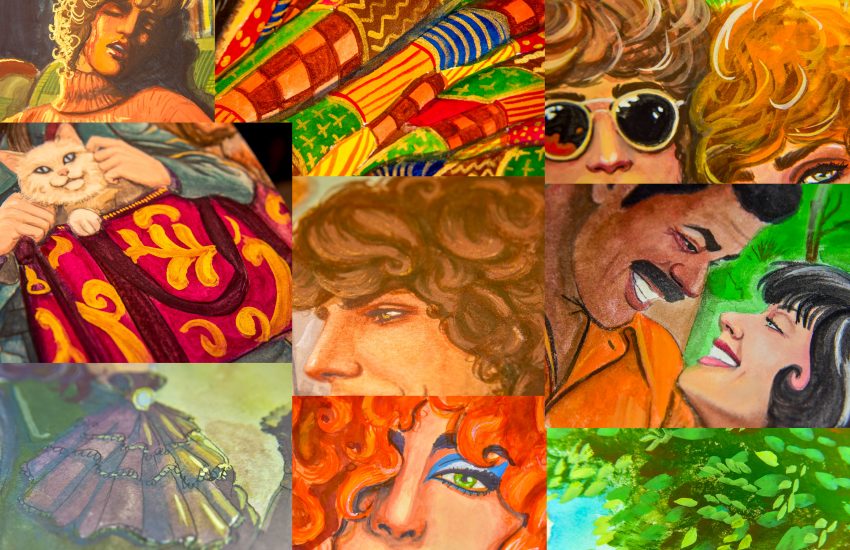
Thanks so much for the review and the tips! And I forgot to mention this before, but I love your art style, it’s so lovely, and it gives me retro manga/anime vibes from the 80s, which I absolutely love. 💜
Yes, try lots of papers and don’t ‘save’ the inks, have fun (I’m saying that for both of us, haha). With 22 bottles, I imagine you can make any colour you want, and a little bit of the ink goes a very long way in my experience. Also, more research is needed, but they seem to be resoluble if they dry on porcelain. Inks I’ve spread out the night before can be used the next day with a wet brush, but I think they perhaps aren’t as strong, maybe something evaporates? I don’t know, my point is that there’s lots of experimenting to do.
Thank you so much for the compliment about my art style! I spent so long as a ‘realist graphite artist’ that I was starting to worry that I’d never develop a style in illustration, but you’ve made me feel much better about that.